Lasagna has earned its place as one of the world’s most beloved comfort foods. Rich layers of pasta, flavorful meat sauce, creamy cheese, and bubbling mozzarella make it a dish that feels special every time it’s served. Traditional lasagna, however, often comes with a downside. Between boiling noodles, layering ingredients, and waiting for a deep casserole to bake, it can take well over an hour before dinner reaches the table.
That’s where Sheet-Pan Lasagna changes everything.
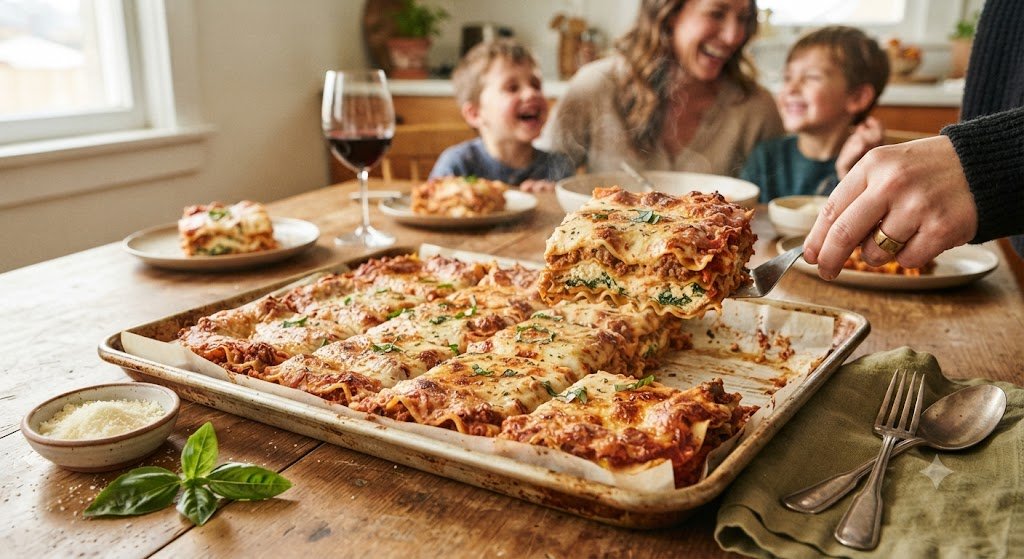
Instead of stacking dozens of layers inside a deep baking dish, sheet-pan lasagna spreads everything across a large baking sheet. The result is a thinner, evenly baked lasagna with crispy edges, perfectly cooked pasta, and more caramelized cheese in every bite. It cooks faster, serves a crowd more easily, and slices beautifully for parties or weeknight meals.
Whether you’re feeding a large family, preparing dinner for guests, or looking for a new twist on a classic recipe, sheet-pan lasagna delivers all the comforting flavors you love with less effort and quicker cooking time.
In this guide, you’ll learn exactly what sheet-pan lasagna is, why it’s becoming so popular, how to make it successfully, and plenty of expert tips to help you create restaurant-quality results at home.
What Is Sheet-Pan Lasagna?
Sheet-pan lasagna is a modern variation of traditional lasagna that’s baked on a rimmed baking sheet instead of a deep casserole dish.
Rather than creating tall layers, the ingredients are spread into thinner layers over a larger surface area. This simple change creates several benefits:
- Faster baking time
- Crispier cheese edges
- Even cooking throughout
- Easier slicing
- More servings per batch
The overall flavor remains familiar, but every bite includes a balance of pasta, sauce, meat, and cheese.
Why Home Cooks Love Sheet-Pan Lasagna
Many people discover sheet-pan lasagna after realizing how convenient it is compared to the traditional version.
Here are some of the biggest advantages.
Faster Cooking
Because the lasagna is thinner, heat reaches the center much more quickly.
Traditional lasagna may need 50–70 minutes in the oven.
Sheet-pan lasagna often finishes baking in about 30–40 minutes.
Perfect for Feeding a Crowd
A standard sheet pan creates many evenly sized portions.
This makes it ideal for:
- Family gatherings
- Birthday parties
- Potlucks
- Holiday dinners
- Meal prep
Everyone receives a perfectly balanced slice.
Crispier Edges
Many lasagna lovers secretly enjoy the crispy corners the most.
A sheet pan creates significantly more crispy edges than a traditional baking dish, giving every serving extra texture.
Easier Serving
Instead of struggling to remove tall slices that fall apart, sheet-pan lasagna cuts neatly into squares or rectangles.
Presentation becomes much easier.
Ingredients You’ll Need
The ingredient list remains wonderfully simple.
For the Meat Sauce
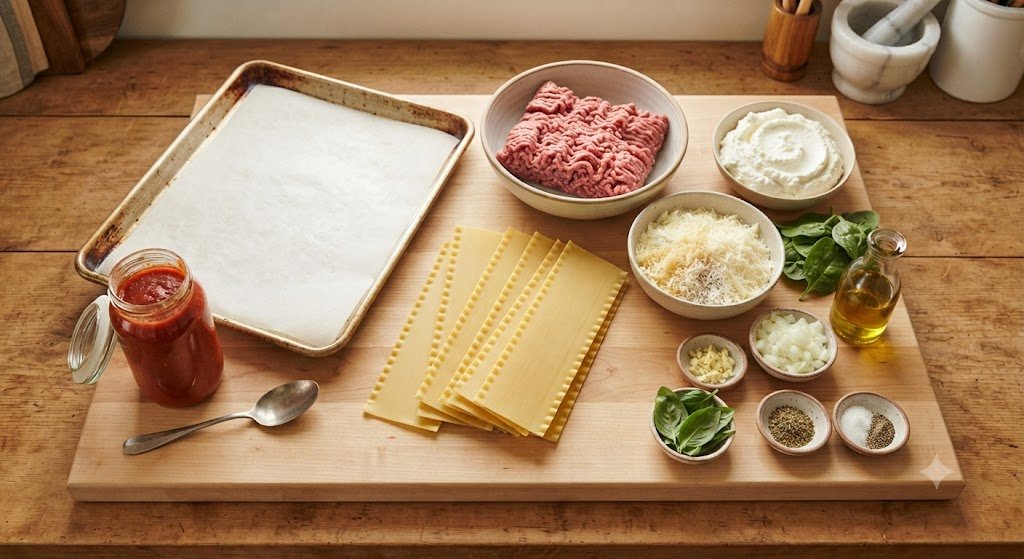
- Ground beef
- Italian sausage (optional)
- Onion
- Garlic
- Olive oil
- Marinara sauce
- Tomato paste
- Italian seasoning
- Salt
- Black pepper
- Red pepper flakes (optional)
For the Cheese Filling
- Ricotta cheese
- Mozzarella cheese
- Parmesan cheese
- Egg
- Fresh parsley
- Basil
Pasta
Regular lasagna noodles or oven-ready noodles both work well.
Many cooks prefer oven-ready noodles because they reduce preparation time.
Optional Add-Ins
Customize your lasagna with:
- Mushrooms
- Spinach
- Zucchini
- Bell peppers
- Kale
- Roasted eggplant
- Fresh basil
- Fresh oregano
Equipment You’ll Need
Preparing sheet-pan lasagna doesn’t require any special tools.
You’ll need:
- Rimmed baking sheet
- Large skillet
- Mixing bowls
- Wooden spoon
- Aluminum foil
- Cheese grater
- Sharp knife
How to Make Sheet-Pan Lasagna
Step 1: Prepare the Sauce
Heat olive oil in a large skillet.
Cook the onions until soft.
Add garlic and stir for about one minute.
Add ground beef and sausage.
Cook until browned.
Drain excess fat if necessary.
Stir in marinara sauce, tomato paste, Italian seasoning, salt, pepper, and red pepper flakes.
Allow the sauce to simmer for about 15 minutes.
A thicker sauce prevents soggy lasagna.
Step 2: Mix the Cheese Filling
In a bowl combine:
- Ricotta
- Egg
- Parmesan
- Half the mozzarella
- Parsley
- Basil
Mix until smooth.
Step 3: Prepare the Baking Sheet
Lightly grease the sheet pan with cooking spray or olive oil.
Spread a thin layer of meat sauce over the bottom.
This prevents sticking.
Step 4: Layer the Lasagna
Place the noodles across the pan.
Spread meat sauce evenly.
Add dollops of cheese mixture.
Repeat the layers until all ingredients are used.
Finish with mozzarella and Parmesan cheese.
Step 5: Bake
Cover loosely with foil.
Bake at 375°F (190°C) for about 25 minutes.
Remove the foil.
Bake another 10–15 minutes until the cheese becomes golden and bubbly.
Step 6: Rest Before Serving
Allow the lasagna to rest for 10–15 minutes.
Resting helps the cheese firm up, making slicing much easier.
Tips for the Best Sheet-Pan Lasagna
Small adjustments can make a big difference.
Use Thick Sauce
Watery sauce creates soggy pasta.
Let the sauce simmer until nicely thickened.
Don’t Overcook the Meat
Brown the meat until just cooked.
It will continue cooking in the oven.
Shred Cheese Fresh
Freshly shredded mozzarella melts more smoothly than pre-shredded cheese, which often contains anti-caking agents.
Cover During the First Bake
Foil prevents the cheese from browning too early while allowing the noodles to soften properly.
Let It Rest
Cutting immediately after baking causes the layers to slide apart.
Ten minutes of resting creates cleaner slices.
Delicious Variations
One of the best things about sheet-pan lasagna is its versatility.
Vegetarian Sheet-Pan Lasagna
Replace the meat with:
- Mushrooms
- Spinach
- Zucchini
- Roasted peppers
- Eggplant
The vegetables create rich flavor while keeping the dish lighter.
Chicken Alfredo Version
Swap marinara for Alfredo sauce.
Use shredded chicken instead of ground beef.
Add spinach and mushrooms for extra flavor.
Spicy Italian Lasagna
Use hot Italian sausage.
Increase red pepper flakes.
Top with sliced jalapeños before baking.
Four Cheese Lasagna
Combine:
- Ricotta
- Mozzarella
- Parmesan
- Provolone
The result is incredibly creamy.
Mexican-Inspired Version
Replace Italian seasoning with taco seasoning.
Use seasoned ground beef.
Add black beans, corn, cheddar cheese, and salsa.
Common Mistakes to Avoid
Even experienced cooks occasionally run into problems.
Too Much Sauce
Excess liquid makes the noodles soft instead of tender.
Too Little Cheese
Cheese holds the layers together and adds richness.
Don’t be afraid to use enough.
Uneven Noodles
Arrange noodles so they cover the pan evenly.
Broken pieces can fill small gaps.
Skipping the Resting Time
Patience leads to cleaner slices.
What to Serve with Sheet-Pan Lasagna
Complete the meal with simple side dishes.
Popular choices include:
- Garlic bread
- Caesar salad
- Roasted vegetables
- Steamed broccoli
- Grilled asparagus
- Tomato cucumber salad
- Bruschetta
- Fresh fruit
These lighter sides balance the richness of the lasagna.
Make-Ahead Tips
Sheet-pan lasagna is excellent for busy schedules.
Assemble it up to one day before baking.
Cover tightly with plastic wrap and refrigerate.
When ready to cook, remove the plastic, cover with foil, and bake.
You may need an additional 5–10 minutes if baking directly from the refrigerator.
Freezing Instructions
Lasagna freezes exceptionally well.
Before Baking
Assemble completely.
Wrap tightly with plastic wrap followed by aluminum foil.
Freeze for up to three months.
After Baking
Cool completely.
Slice into portions.
Store each portion separately in airtight containers.
This makes reheating quick and convenient.
Reheating Leftovers
For the best texture:
Oven: Bake at 350°F until heated through.
Microwave: Heat individual servings for 2–3 minutes.
Adding a spoonful of sauce before reheating helps keep the pasta moist.
Nutritional Benefits
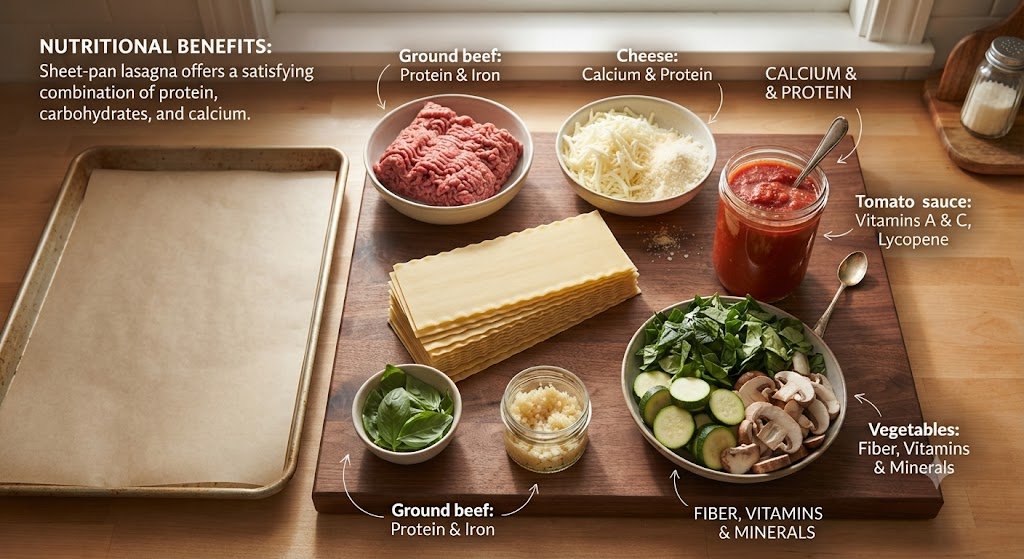
Sheet-pan lasagna offers a satisfying combination of protein, carbohydrates, and calcium.
Ground beef or turkey provides protein and iron.
Cheese contributes calcium and protein.
Tomato sauce contains vitamins A and C along with the antioxidant lycopene.
Adding vegetables such as spinach, zucchini, or mushrooms increases fiber, vitamins, and minerals without changing the comforting nature of the dish.
Why Sheet-Pan Lasagna Is Perfect for Meal Prep
Meal prepping has become increasingly popular because it saves time throughout the week.
Sheet-pan lasagna works especially well because:
- It portions easily.
- It reheats beautifully.
- It freezes well.
- The flavors improve after a day in the refrigerator.
- It provides satisfying lunches and dinners.
Preparing one large pan can cover several meals with minimal extra effort.
Creative Ways to Customize Your Lasagna
Once you’ve mastered the basic recipe, experiment with different flavor combinations.
Try swapping beef for ground turkey or chicken for a lighter option. Add roasted garlic for deeper flavor, stir pesto into the ricotta mixture, or layer in roasted vegetables for extra color and nutrition. Fresh herbs like basil, oregano, or thyme can brighten the finished dish, while smoked mozzarella or provolone adds a unique twist.
You can also create individual flavor zones on the same sheet pan, making one side spicy with hot sausage and chili flakes while keeping the other side mild for children or guests who prefer a classic version.
Sheet-pan lasagna proves that a classic comfort food can be made easier without sacrificing flavor. By spreading the ingredients across a baking sheet, you get faster cooking, crispier edges, even portions, and a dish that’s ideal for weeknight dinners, meal prep, and entertaining alike.
Whether you stick with the traditional meat-and-cheese combination or experiment with vegetables, chicken, or bold new flavors, this recipe offers endless flexibility. With quality ingredients, a well-balanced sauce, and a little attention to layering, you’ll enjoy a homemade lasagna that’s every bit as satisfying as the classic version—while saving valuable time in the kitchen.
The next time you’re craving a hearty Italian-inspired meal, skip the deep casserole dish and give sheet-pan lasagna a try. It may quickly become your new favorite way to enjoy this timeless family favorite.
Frequently Asked Questions
1. Can I use oven-ready lasagna noodles?
Yes. Oven-ready noodles work very well in sheet-pan lasagna and eliminate the need for boiling. Just make sure there’s enough sauce to soften them during baking.
2. Can I make sheet-pan lasagna ahead of time?
Absolutely. Assemble the lasagna up to 24 hours in advance, cover it tightly, refrigerate it, and bake when you’re ready to serve.
3. How long does leftover sheet-pan lasagna last?
Stored in an airtight container, leftovers will keep in the refrigerator for up to four days. For longer storage, freeze portions for up to three months.
4. Can I make this recipe without meat?
Yes. Replace the meat with vegetables such as mushrooms, spinach, zucchini, eggplant, or lentils for a delicious vegetarian version.
5. Why should I let the lasagna rest before cutting?
Resting for 10–15 minutes allows the cheese and sauce to set, making the lasagna easier to slice and helping each serving hold its shape.