Some meals have a way of making an ordinary day feel special. Pesto pasta with chicken is one of those dishes. With tender pieces of seasoned chicken, perfectly cooked pasta, and a rich green pesto sauce full of fresh basil flavor, this recipe delivers comfort, freshness, and restaurant-quality taste in every bite.
Whether you need a quick weeknight dinner, a meal-prep option for busy days, or a dish that will impress your family and guests, pesto pasta with chicken is a reliable choice. It combines simple ingredients into a balanced meal that feels satisfying without requiring complicated cooking skills.
The beauty of this dish is its flexibility. You can make it creamy, keep it light, add vegetables, switch the pasta shape, or adjust the flavors to match your preferences. Once you learn the basics, pesto pasta with chicken can become one of the most useful recipes in your kitchen.
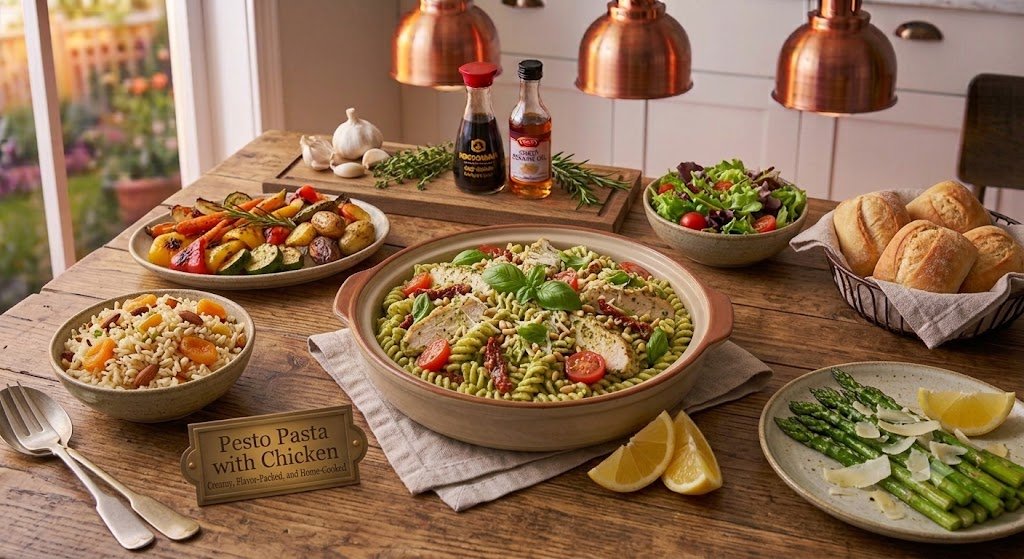
What Makes Pesto Pasta with Chicken So Popular?
Pesto pasta with chicken has become a favorite because it brings together three elements that work perfectly together: flavorful sauce, hearty protein, and comforting carbohydrates.
Pesto provides a bright and fresh taste from basil, garlic, olive oil, nuts, and cheese. Chicken adds lean protein and a savory texture that makes the meal more filling. Pasta acts as the perfect base, soaking up the sauce and creating a satisfying dish.
Unlike heavy pasta recipes that rely only on cream or cheese, pesto pasta has a fresh herbal flavor that keeps the meal from feeling too rich. It can be enjoyed throughout the year and easily adapted for different diets and preferences.
Another reason people love this recipe is convenience. A homemade version can be prepared in about 30 minutes, making it ideal for busy households.
The Key Ingredients for Perfect Pesto Pasta with Chicken
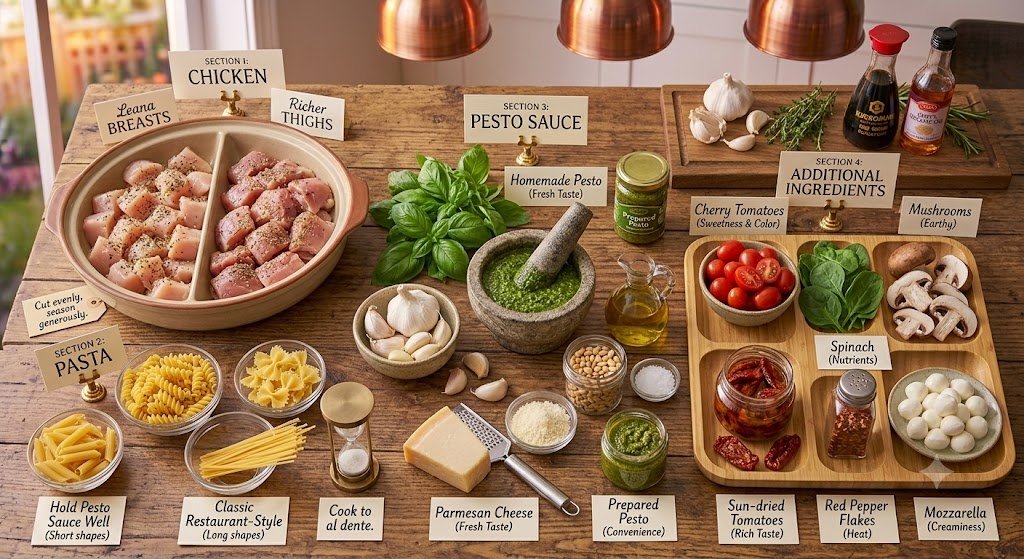
Creating a delicious pesto pasta with chicken starts with choosing quality ingredients. Each component plays an important role in the final flavor.
Chicken
Chicken breast is the most common choice because it is lean and cooks quickly. However, chicken thighs can also be used if you prefer a richer flavor and more tender texture.
For the best results:
- Cut chicken into evenly sized pieces so they cook at the same speed.
- Season generously with salt, pepper, and Italian herbs.
- Avoid overcooking because dry chicken can affect the entire dish.
Grilled, pan-seared, or roasted chicken all work well in this recipe.
Pasta
The pasta shape you choose can change the eating experience. Short pasta varieties like penne, fusilli, and bow ties hold pesto sauce well, while long pasta like spaghetti or fettuccine creates a more classic restaurant-style presentation.
Always cook pasta until it is slightly firm, also known as al dente. This helps it maintain texture and prevents the dish from becoming mushy.
Pesto Sauce
Pesto is the heart of this recipe. Traditional basil pesto includes:
- Fresh basil leaves
- Garlic
- Parmesan cheese
- Pine nuts
- Extra virgin olive oil
- Seasonings
You can use store-bought pesto for convenience or make your own at home for a fresher taste.
Homemade pesto often has a stronger basil flavor and allows you to control ingredients, while prepared pesto is a great time-saving option.
Additional Ingredients
Many cooks like to add extra ingredients to make the dish more complete. Popular additions include:
- Cherry tomatoes for sweetness and color
- Spinach for extra nutrients
- Mushrooms for earthy flavor
- Sun-dried tomatoes for a rich taste
- Red pepper flakes for heat
- Fresh mozzarella for creaminess
These additions allow you to customize the recipe based on what you have available.
How to Make Pesto Pasta with Chicken Step by Step (Detailed Guide)
Making pesto pasta with chicken is a simple process, but paying attention to each step can transform a basic pasta dish into a flavorful, restaurant-quality meal. The key is to properly season the chicken, cook the pasta with the right texture, balance the pesto sauce, and finish the dish with fresh ingredients that enhance the overall flavor.
Step 1: Prepare and Season the Chicken
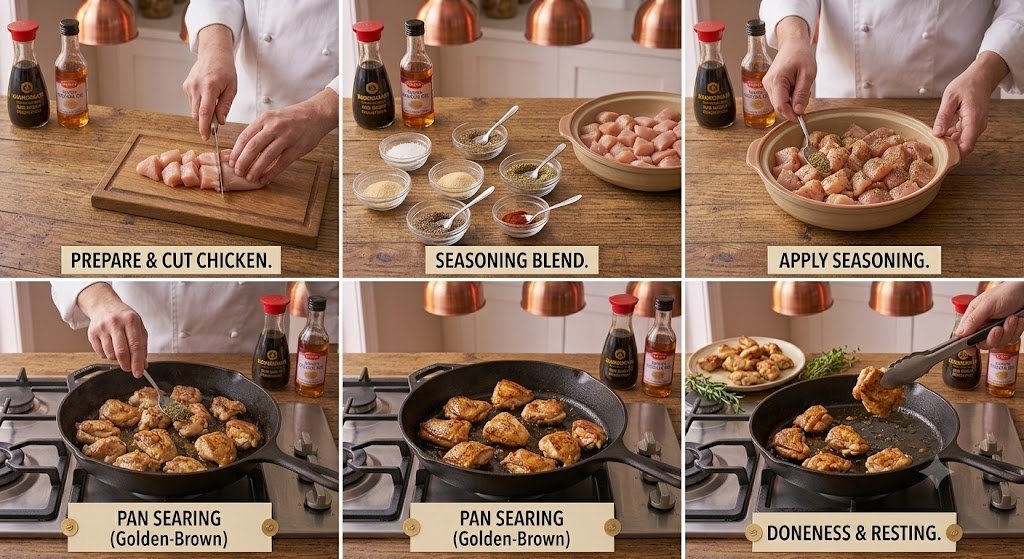
The chicken is one of the most important parts of this recipe because it adds protein, texture, and a savory flavor that balances the freshness of the pesto sauce.
Start by choosing boneless, skinless chicken breasts or chicken thighs. Chicken breasts create a lighter dish, while chicken thighs provide more moisture and a richer flavor.
Cut the chicken into evenly sized bite-sized pieces. Keeping the pieces similar in size helps them cook evenly and prevents some pieces from becoming dry while others remain undercooked.
Before cooking, season the chicken well. A simple seasoning combination works perfectly:
- Salt to enhance the natural flavor of the chicken
- Black pepper for mild heat and depth
- Garlic powder for a savory taste
- Italian seasoning for extra herbs that complement the pesto
- A small amount of paprika for color and mild smokiness (optional)
Allow the seasoned chicken to sit for a few minutes before cooking. This gives the spices time to stick to the surface and improves the overall flavor.
Heat a large skillet or frying pan over medium heat and add a tablespoon of olive oil. Once the oil is hot, place the chicken pieces in the pan in a single layer. Avoid overcrowding the pan because too much chicken at once can release water and prevent proper browning.
Cook the chicken for about 5–7 minutes, stirring occasionally, until the outside develops a golden-brown color and the inside is fully cooked.
A properly cooked piece of chicken should be:
- Golden on the outside
- Tender and juicy inside
- No longer pink in the center
Once cooked, remove the chicken from the pan and set it aside. Keeping it separate while preparing the pasta helps prevent overcooking.
Step 2: Cook the Pasta Properly
The pasta creates the foundation of this dish, so cooking it correctly is essential. Perfectly cooked pasta should have a firm texture that holds up well with the pesto sauce.
Fill a large pot with water and bring it to a rolling boil. Add a generous amount of salt before adding the pasta. Salted water seasons the pasta from the inside and gives the final dish more flavor.
Add your preferred pasta shape. Some excellent choices for pesto pasta with chicken include:
- Penne
- Fusilli
- Farfalle
- Spaghetti
- Fettuccine
Cook the pasta according to the package instructions, but aim for an al dente texture. This means the pasta should be cooked but still have a slight firmness when you bite into it.
Avoid overcooking the pasta because soft pasta can become mushy when combined with pesto sauce.
Before draining the pasta, reserve about half a cup of pasta water. This step is often overlooked, but it is one of the secrets to making a smooth and well-balanced sauce.
Pasta water contains starch released from the pasta during cooking. This starch helps:
- Thin out thick pesto sauce
- Help the sauce stick to the pasta
- Create a smoother texture
- Blend the ingredients together more evenly
Drain the pasta but avoid rinsing it. Rinsing removes the starch that helps the pesto sauce coat the noodles properly.
Step 3: Combine Pasta and Pesto
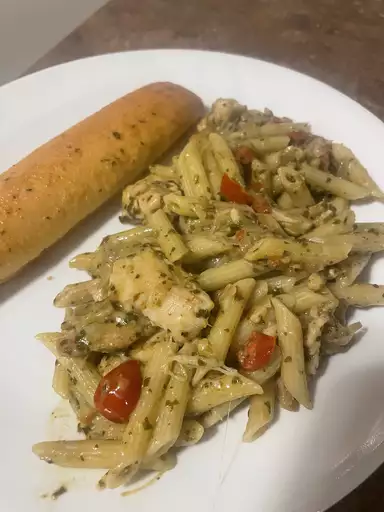
Once the chicken and pasta are ready, it is time to bring everything together.
Return the cooked chicken to the skillet. Add the drained pasta and gently mix the ingredients together.
Reduce the heat before adding pesto. Pesto contains fresh basil and herbs that taste best when they are not exposed to high heat for a long time. Excessive heat can dull the fresh flavor and make the sauce appear oily.
Add the pesto sauce gradually rather than pouring in the entire amount at once. This allows you to control the flavor and texture.
Start with a few spoonfuls, mix well, and add more if needed.
If the sauce feels too thick, add a small amount of reserved pasta water. Add it slowly while stirring until the pesto creates a smooth coating around the pasta.
The ideal texture should be:
- Creamy but not heavy
- Smooth but not watery
- Thick enough to cling to the pasta
At this stage, taste the dish and adjust the seasoning. You may want to add:
- Extra black pepper
- A pinch of salt
- More Parmesan cheese
- A splash of lemon juice for brightness
Mix everything gently to make sure every piece of pasta and chicken is covered with the flavorful pesto sauce.
Step 4: Finish with Fresh Ingredients
The final touches can make a big difference in the taste and appearance of your pesto pasta with chicken.
After combining all ingredients, finish the dish with fresh toppings that add flavor, color, and texture.
Popular finishing ingredients include:
Fresh Parmesan Cheese:
A sprinkle of freshly grated Parmesan adds a salty, nutty flavor that pairs beautifully with basil pesto.
Fresh Basil Leaves:
Adding a few basil leaves on top enhances the herbal flavor and gives the dish a fresh, homemade appearance.
Extra Virgin Olive Oil:
A light drizzle of high-quality olive oil adds richness and helps bring all the flavors together.
Black Pepper:
Freshly cracked black pepper adds a mild spice and balances the creamy flavors.
Red Pepper Flakes:
If you enjoy a little heat, crushed red pepper flakes provide a gentle kick without overpowering the pesto.
You can also add extra toppings depending on your preference:
- Cherry tomatoes for freshness and sweetness
- Toasted pine nuts for crunch
- Mozzarella for extra creaminess
- Roasted vegetables for added nutrition
Serve the pesto pasta with chicken while it is warm for the best flavor and texture. The sauce will be at its creamiest, and the aroma of fresh basil and Parmesan will be most noticeable right after cooking.
Tips for Making Restaurant-Quality Pesto Pasta with Chicken
Even simple recipes can become exceptional with a few smart techniques.
Use Fresh Ingredients When Possible
Fresh basil, quality olive oil, and real Parmesan cheese can greatly improve the taste of pesto. While convenient ingredients are helpful, fresh components often create a more vibrant flavor.
Do Not Overcook the Pasta
Overcooked pasta becomes soft and loses its ability to hold sauce. Cooking it al dente creates better texture and makes the dish feel more professional.
Balance the Sauce
Pesto is naturally flavorful, but it can sometimes feel too thick or oily. Adding a little pasta water helps create a silky sauce that spreads evenly.
If the pesto flavor is too strong, balance it with:
- A splash of lemon juice
- Extra Parmesan
- A small amount of cream
- More pasta water
Let the Chicken Develop Flavor
Instead of simply boiling chicken, searing it in a hot pan creates a golden crust and deeper flavor. Seasoning the chicken before cooking also ensures every bite is flavorful.
Creamy Pesto Pasta with Chicken Variation
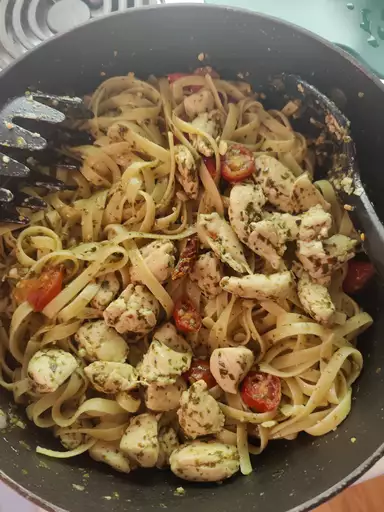
Many people enjoy a creamy version of pesto pasta because it creates a smoother and richer sauce.
To make creamy pesto pasta with chicken:
- Cook the chicken as usual.
- Add a small amount of heavy cream or cream cheese to the pesto.
- Stir until the sauce becomes smooth.
- Combine with pasta and chicken.
This version is especially popular for family dinners because the creamy texture appeals to a wide range of tastes.
For a lighter option, you can use milk, Greek yogurt, or a small amount of pasta water instead of heavy cream.
Healthy Ways to Customize Pesto Pasta with Chicken
Pesto pasta with chicken can easily fit into a balanced eating plan with a few adjustments.
Add More Vegetables
Vegetables increase nutrients, color, and texture. Try adding:
- Broccoli
- Zucchini
- Bell peppers
- Spinach
- Peas
A simple way to make the meal healthier is to replace part of the pasta with vegetables.
Choose Whole Grain Pasta
Whole wheat pasta provides more fiber than traditional white pasta. It also creates a slightly nutty flavor that pairs well with pesto.
Control Portion Sizes
Pasta is satisfying, but balancing the plate with vegetables and protein can help create a more complete meal.
A good serving idea is:
- Half the plate with vegetables
- One-quarter with chicken
- One-quarter with pasta
Common Mistakes to Avoid
Even experienced cooks can make mistakes when preparing pesto pasta with chicken. Avoiding these problems will improve your results.
Using Too Much Pesto
Pesto has a strong flavor, so adding too much can overpower the dish. Start with a moderate amount and add more if needed.
Forgetting Pasta Water
Many people drain all the pasta water without saving any. A small amount can transform thick pesto into a smooth sauce.
Cooking Chicken Too Long
Chicken becomes dry when overcooked. Cut pieces evenly and remove them from heat once they reach a safe internal temperature.
Adding Pesto Over High Heat
Pesto is best added at the end. Cooking it over very high heat can reduce its fresh flavor and change its texture.
How to Store and Reheat Pesto Pasta with Chicken
This recipe works well for leftovers, making it a great meal-prep option.
Store leftover pesto pasta with chicken in an airtight container in the refrigerator. It usually stays fresh for several days when properly stored.
When reheating:
- Add a splash of water or milk before warming.
- Heat gently to prevent the sauce from separating.
- Stir occasionally for even warming.
You can also enjoy it cold as a pasta salad by adding fresh vegetables and a little extra pesto.
What to Serve with Pesto Pasta with Chicken
Although this dish can stand alone, a few side options can make it feel like a complete dinner.
Great pairings include:
- Garlic bread
- Fresh garden salad
- Roasted vegetables
- Tomato soup
- Grilled asparagus
For a lighter meal, serve a smaller portion of pasta with a large salad on the side.
Why Pesto Pasta with Chicken Is Perfect for Busy Families
Modern cooking often requires meals that are quick, affordable, and satisfying. Pesto pasta with chicken checks all three boxes.
It uses easy-to-find ingredients, requires minimal preparation, and can be customized for different tastes. Parents can add vegetables for extra nutrition, students can prepare it for meal prep, and home cooks can serve it for special occasions.
The recipe also works well for leftovers, which helps reduce food waste and saves time during busy weeks.
Final Thoughts
Pesto pasta with chicken is more than just a simple pasta recipe. It is a meal that combines fresh flavors, comforting textures, and endless customization possibilities. From a quick weekday dinner to a meal guests will remember, this dish proves that simple ingredients can create something impressive.
With flavorful chicken, vibrant pesto, and perfectly cooked pasta, you can bring a delicious Italian-inspired meal to your own kitchen. Once you master the basics, you can experiment with different ingredients and create your own signature version.
Whether you prefer a creamy sauce, extra vegetables, or a classic pesto flavor, this recipe is a dependable choice that belongs in every home cook’s collection.
Frequently Asked Questions
1. Can I use store-bought pesto for pesto pasta with chicken?
Yes. Store-bought pesto is a convenient option and works well for this recipe. Choose a quality brand with simple ingredients, or improve the flavor by adding fresh Parmesan, basil, or a squeeze of lemon juice.
2. What type of chicken is best for pesto pasta?
Chicken breast is commonly used because it is lean and cooks quickly. Chicken thighs are also a great option because they are more tender and flavorful.
3. Can I make pesto pasta with chicken ahead of time?
Yes. You can prepare it ahead and store it in the refrigerator. When reheating, add a little water or milk to help loosen the sauce.
4. How can I make pesto pasta with chicken healthier?
You can make it healthier by adding more vegetables, using whole grain pasta, reducing the amount of cheese, and balancing the meal with lean protein.
5. Can I freeze pesto pasta with chicken?
Yes, but the texture may change slightly after freezing. For best results, freeze the chicken and pasta mixture in an airtight container and reheat gently with a little extra sauce or liquid.