Introduction
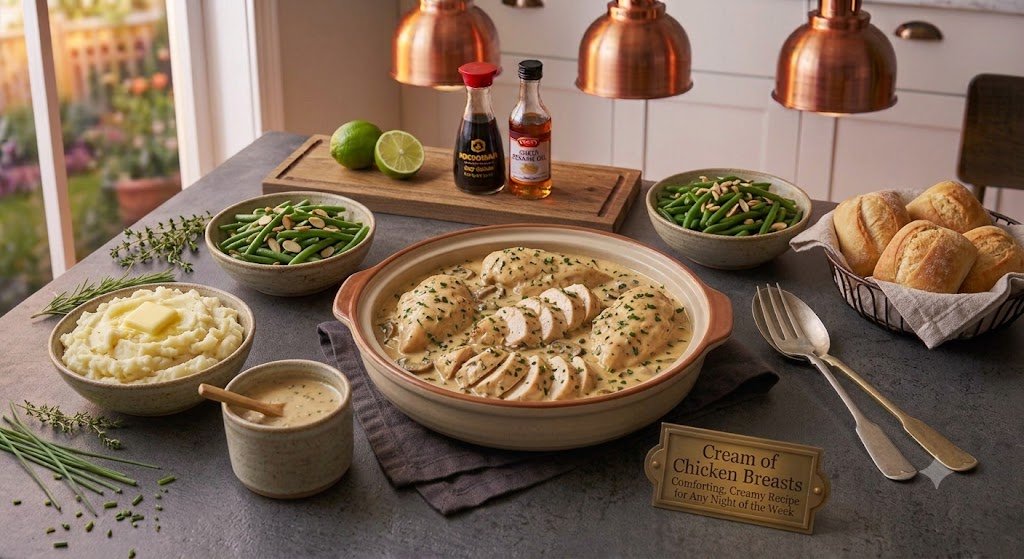
Few meals offer the same level of comfort as a perfectly prepared cream of chicken breast dish. Tender chicken covered in a rich, creamy sauce creates the kind of homemade dinner that feels both satisfying and special. Whether you’re cooking for your family, preparing a cozy meal for guests, or simply looking for an easy recipe that delivers big flavor, cream of chicken breasts are a timeless choice.
The beauty of this dish comes from its simplicity. A few basic ingredients—juicy chicken breasts, a creamy sauce, herbs, seasonings, and everyday pantry staples—come together to create a meal that tastes like it took hours to prepare. The creamy texture balances the lean chicken, while garlic, herbs, and spices add layers of flavor that keep every bite interesting.
Cream of chicken breasts are also incredibly versatile. You can serve them with mashed potatoes for a classic comfort meal, pair them with rice for a family-friendly dinner, or add vegetables and pasta to create a complete one-pan dish. With the right techniques, even beginner cooks can create a restaurant-quality meal at home.
This guide covers everything you need to know about making delicious cream of chicken breasts, including ingredient choices, cooking methods, helpful tips, variations, storage advice, and answers to common questions.
What Are Cream of Chicken Breasts?
Cream of chicken breasts are a classic dish made by cooking chicken breast fillets in a smooth, flavorful cream-based sauce. The sauce is typically prepared with ingredients such as cream, milk, chicken broth, butter, garlic, herbs, and seasonings.
Unlike plain grilled or baked chicken, this recipe focuses on creating a balance between tender protein and a rich sauce. The creamy coating helps keep the chicken moist while adding a comforting texture that makes the dish feel indulgent.
Many versions of this recipe use a simple skillet method, where the chicken is first seared to develop flavor and then simmered gently in the sauce until fully cooked.
Why Cream of Chicken Breasts Are So Popular
They Are Easy to Make
One of the biggest advantages of this recipe is its simplicity. You don’t need advanced cooking skills or complicated equipment. With a single skillet and a handful of ingredients, you can prepare a delicious dinner.
They Are Family-Friendly
The mild flavor of chicken combined with a creamy sauce appeals to both adults and children. You can easily adjust the seasonings to suit different preferences.
They Are Highly Customizable
Cream of chicken breasts provide an excellent base for creativity.
You can add:
- Mushrooms for an earthy flavor
- Spinach for extra nutrition
- Sun-dried tomatoes for a Mediterranean twist
- Cheese for extra richness
- Bacon for smoky flavor
- Fresh herbs for brightness
They Work for Meal Prep
This dish stores and reheats well, making it a practical option for busy households.
Nutritional Benefits of Cream of Chicken Breasts
Chicken breast is known as a lean source of protein, and when combined with vegetables and balanced portions, this dish can fit into a nutritious meal plan.
| Nutrient | Approximate Amount (Per Serving) | Benefits |
|---|---|---|
| Calories | 350–500 kcal | Provides satisfying energy |
| Protein | 35–45 g | Supports muscle maintenance and fullness |
| Fat | 15–25 g | Provides flavor and helps absorb nutrients |
| Carbohydrates | 5–15 g | Depends on sauce and side dishes |
| Vitamin B6 | High | Supports energy metabolism |
| Selenium | High | Helps support immune function |
| Calcium | Moderate | Supports bone health when dairy is included |
Note: Nutrition values vary depending on the amount of cream, butter, cheese, and side dishes used.
Essential Ingredients
Chicken Breasts
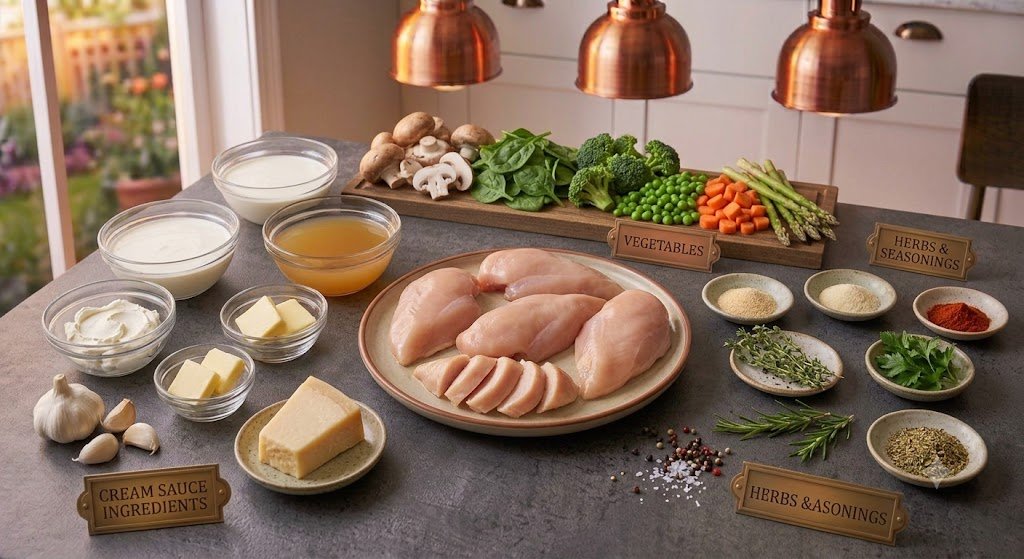
Boneless, skinless chicken breasts are the most common choice because they cook quickly and pair well with creamy sauces. Choose pieces that are similar in size so they cook evenly.
If the chicken breasts are very thick, slice them horizontally or gently pound them to create a more even thickness.
Cream Sauce Ingredients
A good cream sauce creates the signature flavor of this dish.
Common ingredients include:
- Heavy cream
- Milk
- Chicken broth
- Butter
- Garlic
- Parmesan cheese
- Cream cheese
Each ingredient contributes richness and texture.
Herbs and Seasonings
Seasoning is essential because chicken breast has a mild flavor.
Popular choices include:
- Garlic powder
- Onion powder
- Black pepper
- Paprika
- Thyme
- Rosemary
- Parsley
- Italian seasoning
Vegetables
Adding vegetables makes the meal more balanced and colorful.
Great options include:
- Mushrooms
- Spinach
- Broccoli
- Peas
- Carrots
- Asparagus
How to Make Cream of Chicken Breasts: Step-by-Step Guide
Making Cream of Chicken Breasts at home is easier than it looks. The key to creating a restaurant-quality dish is building flavor in layers—starting with properly seasoned chicken, developing a rich sauce, and finishing everything together so the flavors blend perfectly. Follow these detailed steps for tender chicken and a smooth, creamy sauce every time.
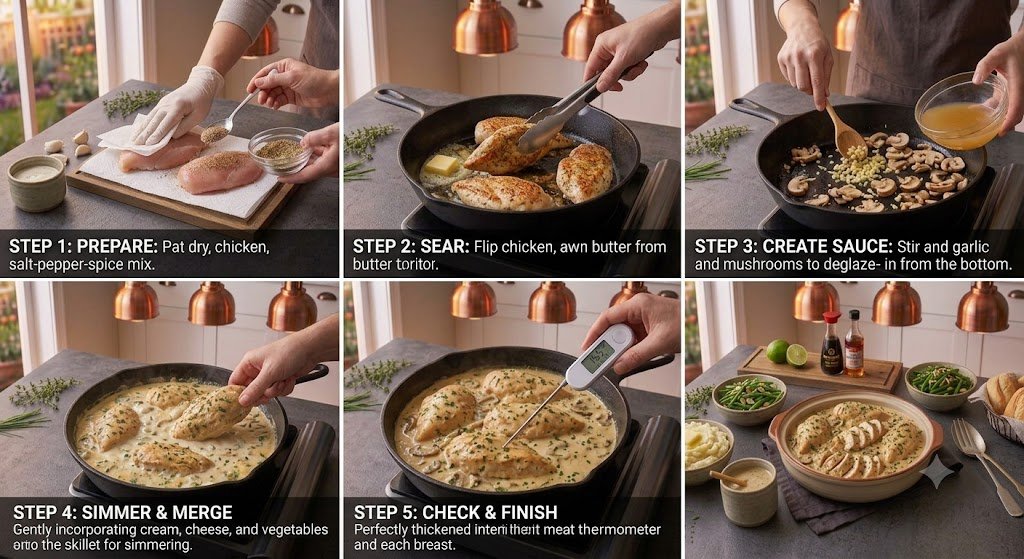
Step 1: Prepare the Chicken
Before cooking, begin by preparing the chicken breasts properly. Start by removing any excess fat or uneven pieces from the chicken. If the chicken breasts are very thick, consider slicing them horizontally into thinner pieces or gently pounding them with a meat mallet. This helps the chicken cook more evenly and prevents the outside from becoming dry before the center is fully cooked.
Next, pat the chicken breasts completely dry using paper towels. This step may seem small, but it makes a big difference. Removing surface moisture allows the chicken to develop a beautiful golden-brown crust when it touches the hot skillet. Wet chicken tends to steam instead of sear, which can result in less flavor and a pale appearance.
Season both sides generously with salt and pepper. You can also add additional spices such as garlic powder, onion powder, paprika, Italian seasoning, or dried herbs. Seasoning the chicken before cooking allows the flavors to penetrate the meat and creates a stronger overall taste.
Let the seasoned chicken sit for about 10–15 minutes before cooking if you have time. This helps the seasoning absorb and allows the chicken to cook more evenly.
Step 2: Sear the Chicken
Searing the chicken is an important step because it creates a layer of rich flavor that forms the foundation of the entire dish. Heat a large skillet over medium-high heat and add butter, olive oil, or a combination of both.
Once the oil is hot, carefully place the chicken breasts into the skillet. Avoid moving them around too much because keeping them still allows a golden crust to develop. Cook the chicken for about 3–5 minutes on each side, depending on thickness, until the outside becomes beautifully browned.
At this stage, the chicken does not need to be fully cooked. The purpose of searing is to build flavor and create texture. The chicken will finish cooking later in the creamy sauce.
Once the chicken has developed a golden crust, remove it from the skillet and place it on a clean plate. Keep any flavorful juices that collect on the plate because they can be added back into the sauce later.
Step 3: Prepare the Cream Sauce
The same skillet used for the chicken now becomes the base for your creamy sauce. Do not clean the pan after removing the chicken. The browned bits left behind from searing contain concentrated flavor and will make the sauce taste richer.
Reduce the heat to medium and add ingredients such as minced garlic, chopped onions, or mushrooms. Cook for 1–2 minutes until the vegetables become soft and fragrant. Be careful not to burn the garlic because it can create a bitter taste.
Next, add chicken broth to the skillet. Use a wooden spoon to gently scrape the bottom of the pan and release the browned pieces. This process, known as deglazing, blends those flavorful bits into the sauce.
Once the broth is combined, slowly add your cream. Heavy cream creates the richest sauce, but you can also use half-and-half or a mixture of milk and cream for a lighter version. Stir continuously to combine everything smoothly.
Add seasonings such as black pepper, thyme, rosemary, parsley, or Italian seasoning. If you want a richer flavor, add grated Parmesan cheese or a small amount of cream cheese. Allow the sauce to simmer gently for several minutes until it begins to thicken.
Avoid boiling the sauce at high heat because cream-based sauces can separate. A slow simmer helps create a smooth, silky texture.
Step 4: Finish Cooking the Chicken
Once the cream sauce has thickened slightly, return the seared chicken breasts to the skillet. Spoon some of the sauce over the top of the chicken so it absorbs the flavors while finishing cooking.
Reduce the heat to low and allow the chicken to simmer gently in the sauce. This usually takes about 10–15 minutes, depending on the thickness of the chicken breasts.
The chicken is ready when it reaches an internal temperature of 165°F (74°C). Using a meat thermometer is the most reliable way to check doneness and prevent overcooking.
While the chicken finishes cooking, the creamy sauce will continue to develop flavor. The chicken juices mix with the sauce, creating a richer and more savory result.
If the sauce becomes too thick, add a small splash of chicken broth or milk to loosen it. If it seems too thin, allow it to simmer uncovered for a few extra minutes.
Step 5: Serve and Garnish
Once the chicken is fully cooked and the sauce has reached the perfect consistency, it’s time to serve.
Transfer the chicken breasts to serving plates and spoon plenty of the creamy sauce over the top. Garnish with freshly chopped parsley, basil, grated Parmesan cheese, or a sprinkle of cracked black pepper for extra flavor and a beautiful presentation.
Cream of Chicken Breasts pairs wonderfully with many side dishes. Serve it with:
- Mashed potatoes to soak up the creamy sauce
- Steamed rice for a simple and filling meal
- Pasta for an Italian-inspired dinner
- Roasted vegetables for added nutrition
- Fresh salad for a lighter balance
For the best experience, serve the dish while it is warm. The creamy sauce is at its smoothest immediately after cooking, and the chicken remains tender and juicy.
Following these steps will help you create Cream of Chicken Breasts with perfectly cooked chicken, a rich homemade sauce, and restaurant-quality flavor using simple ingredients from your own kitchen.
Tips for Perfect Cream of Chicken Breasts
Making a delicious Cream of Chicken Breasts dish is not just about following a recipe—it is about using the right techniques to keep the chicken tender, the sauce creamy, and the flavors balanced. These simple tips can help you achieve better results every time.
Avoid Overcooking the Chicken
Chicken breasts are naturally lean, which means they can quickly become dry and tough if cooked for too long. Since they contain less fat than chicken thighs, they need careful cooking to maintain their juicy texture.
The best way to avoid overcooking is to use a meat thermometer instead of depending only on cooking time. Insert the thermometer into the thickest part of the chicken breast. The chicken is perfectly cooked when it reaches an internal temperature of 165°F (74°C).
Another helpful tip is to avoid cooking chicken breasts over extremely high heat for a long time. Searing the chicken first creates flavor, but finishing it gently in the cream sauce allows it to cook slowly while absorbing moisture and flavor.
If your chicken breasts are very thick, consider cutting them into thinner pieces before cooking. This helps them cook evenly and reduces the chance of the outside becoming dry while the inside is still undercooked.
Use Medium Heat for the Sauce
A creamy sauce requires gentle cooking. Many people make the mistake of turning up the heat to make the sauce thicken faster, but high temperatures can cause dairy ingredients to separate. This may result in a sauce that looks oily, grainy, or uneven.
After adding cream, milk, or cheese, reduce the heat to medium-low and allow the sauce to simmer slowly. A gentle simmer gives the ingredients time to blend together and creates a smooth, silky texture.
If the sauce becomes too thick, add a small amount of chicken broth or milk to loosen it. If the sauce is too thin, allow it to simmer uncovered for a few extra minutes until it reaches your preferred consistency.
Patience is important when making cream sauces. Slow cooking creates a richer flavor and better texture.
Season Every Layer
One of the secrets to flavorful Cream of Chicken Breasts is seasoning each part of the dish instead of adding all the seasoning at the end.
Start by seasoning the chicken before searing it. Salt, pepper, paprika, garlic powder, or Italian herbs help create a flavorful crust on the outside of the chicken.
Next, season the vegetables and sauce while cooking. Garlic, onions, mushrooms, and herbs release their flavors when cooked, creating a stronger base for the dish.
Finally, taste the sauce before serving and adjust the seasoning if needed. A small amount of salt, fresh herbs, lemon juice, or black pepper can brighten the entire recipe.
Layering flavors creates a more complex and satisfying dish compared to simply adding seasoning once at the end.
Let the Chicken Rest
Resting the chicken after cooking is a simple step that can make a big difference in texture.
When chicken cooks, the natural juices move toward the center of the meat. If you cut into it immediately after cooking, those juices can spill out onto the plate, leaving the chicken drier.
Allow the cooked chicken to rest for about 5 minutes before slicing or serving. During this time, the juices redistribute throughout the meat, helping each bite stay tender and flavorful.
Even when serving the chicken with cream sauce, resting still improves the final result.
Use Fresh Ingredients
The quality of your ingredients directly affects the final flavor of Cream of Chicken Breasts.
Fresh garlic provides a stronger and more aromatic flavor than garlic powder. Fresh herbs such as parsley, thyme, rosemary, and basil add brightness that dried herbs cannot always provide.
Using a good-quality chicken broth also makes a noticeable difference because it becomes part of the sauce. Low-quality broth may taste overly salty or lack depth.
Whenever possible, choose fresh vegetables, real cream, and freshly grated cheese. Small upgrades in ingredients can turn a simple recipe into something that tastes restaurant-quality.
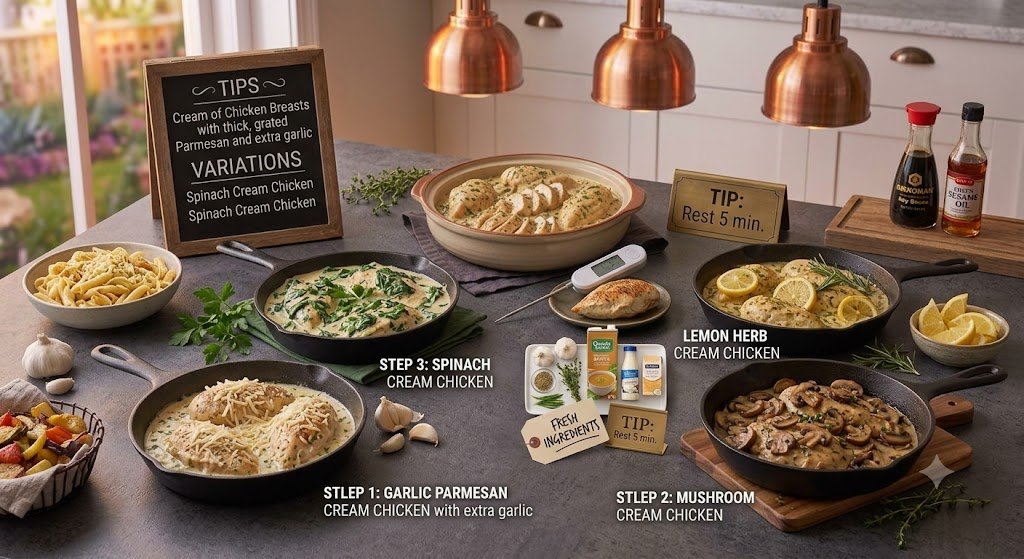
Delicious Variations of Cream of Chicken Breasts
The classic recipe is already delicious, but one of its biggest advantages is how easily it can be customized. By adding different ingredients, you can create completely new flavors while keeping the same creamy, comforting base.
Garlic Parmesan Cream Chicken
Garlic Parmesan Cream Chicken is a rich and flavorful variation inspired by Italian cuisine. It combines roasted garlic flavor with the salty, nutty taste of Parmesan cheese.
To make this version, increase the amount of fresh garlic when preparing the sauce. Add freshly grated Parmesan cheese near the end of cooking and stir until it melts smoothly into the cream.
The cheese helps thicken the sauce while adding extra richness.
This variation pairs especially well with:
- Fettuccine or spaghetti
- Garlic bread
- Roasted asparagus
- Steamed broccoli
For an extra restaurant-style finish, sprinkle additional Parmesan and fresh parsley over the chicken before serving.
Mushroom Cream Chicken
Mushroom Cream Chicken is a comforting variation with deep, earthy flavors. Mushrooms naturally absorb the creamy sauce and add a satisfying texture to every bite.
To prepare this version, slice fresh mushrooms and sauté them with onions and garlic before adding the cream. Cooking the mushrooms first allows them to release moisture and develop a richer flavor.
Popular mushroom choices include:
- Button mushrooms
- Cremini mushrooms
- Portobello mushrooms
- Shiitake mushrooms
This variation is especially enjoyable during colder months because it creates a warm, cozy meal.
Serve Mushroom Cream Chicken with:
- Mashed potatoes
- Egg noodles
- Rice
- Crusty bread
The creamy mushroom sauce is perfect for soaking up with your favorite side dish.
Spinach Cream Chicken
Spinach Cream Chicken is an excellent choice when you want to add more vegetables while keeping the dish creamy and satisfying.
Fresh spinach works best because it cooks quickly and blends naturally into the sauce. Add it near the end of cooking so it gently wilts without becoming overcooked.
Spinach adds:
- Fresh flavor
- Beautiful color
- Fiber
- Vitamins and minerals
You can also add other vegetables such as cherry tomatoes, mushrooms, or bell peppers for more variety.
This version pairs well with pasta, rice, or roasted vegetables.
Spicy Cream Chicken
For those who enjoy bold flavors, Spicy Cream Chicken adds heat to the classic creamy recipe.
You can increase the spice level by adding:
- Crushed red pepper flakes
- Cayenne pepper
- Smoked paprika
- Jalapeños
- Hot sauce
The key is balancing the heat with the cream sauce. The richness of the cream helps soften the spice, creating a dish that is flavorful rather than overwhelming.
Spicy Cream Chicken works well with simple sides such as:
- White rice
- Corn
- Roasted potatoes
- Fresh salad
Adjust the spice gradually so you can control the final flavor.
Lemon Herb Cream Chicken
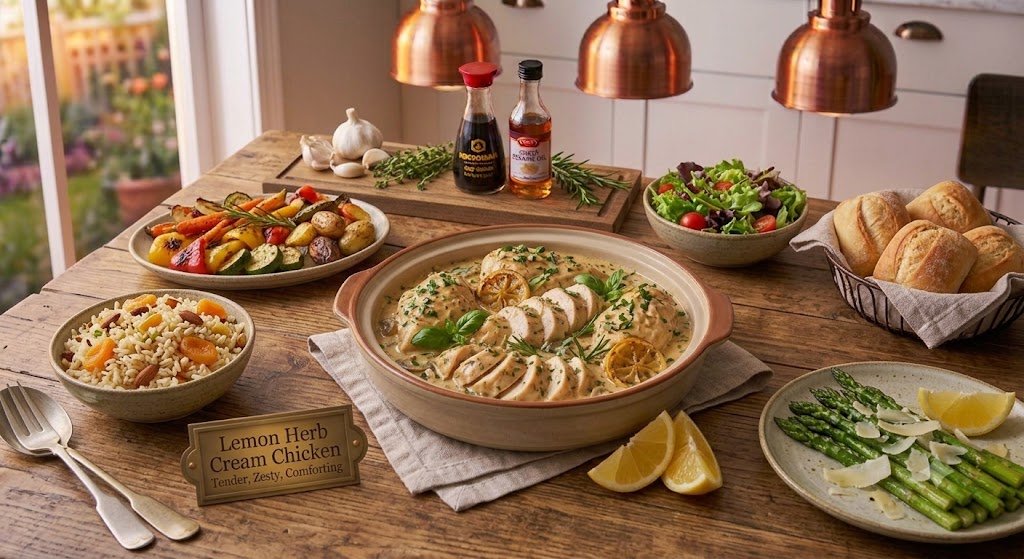
Lemon Herb Cream Chicken is a lighter variation that balances the richness of the sauce with fresh citrus flavor.
Add fresh lemon juice near the end of cooking rather than at the beginning. This keeps the bright flavor intact and prevents the cream sauce from becoming too acidic.
Fresh herbs such as:
- Thyme
- Parsley
- Rosemary
- Basil
work beautifully with lemon and chicken.
This version is ideal for spring and summer meals because it feels fresh while still being comforting.
Serve Lemon Herb Cream Chicken with:
- Roasted vegetables
- Rice pilaf
- Green salad
- Steamed asparagus
The combination of creamy sauce, tender chicken, herbs, and citrus creates a perfectly balanced dish.
Make It Your Own
The best part about Cream of Chicken Breasts is its flexibility. Once you master the basic recipe, you can experiment with different cheeses, vegetables, herbs, and spices to create your own signature version.
Whether you prefer rich garlic Parmesan flavors, earthy mushrooms, fresh spinach, spicy seasonings, or bright lemon herbs, these variations allow you to enjoy a new experience every time you make this comforting dish.
Common Mistakes to Avoid
Cooking Chicken Straight From the Refrigerator
Very cold chicken cooks unevenly. Let it sit at room temperature briefly before cooking.
Using Too Much Cream
A heavy sauce can overpower the chicken. Balance richness with broth, herbs, or lemon juice.
Skipping the Searing Step
Searing adds valuable flavor through browning. Skipping this step may result in a less flavorful dish.
Boiling the Cream Sauce
High heat can cause the sauce to become grainy or separate. Keep the temperature gentle.
Cutting the Chicken Immediately
Slicing too soon can release juices and make the meat drier.
Best Side Dishes to Serve
Cream of chicken breasts pair well with many comforting sides.
Popular choices include:
- Mashed potatoes
- White rice
- Pasta
- Roasted vegetables
- Steamed broccoli
- Garlic bread
- Green salad
- Mashed cauliflower
For a lighter option, serve the chicken with roasted vegetables or a fresh salad.
Storage and Meal Prep Tips
Cream of chicken breasts are excellent for leftovers.
Store cooked chicken in an airtight container in the refrigerator for up to four days.
When reheating, use low heat and add a splash of milk or broth if the sauce has thickened too much.
This dish can also be frozen, although cream sauces may slightly change texture after freezing. For best results, thaw slowly in the refrigerator and reheat gently.
Why Homemade Cream of Chicken Breasts Are Better
Making this dish at home allows you to control the ingredients and customize the flavors. You can reduce sodium, choose higher-quality chicken, add more vegetables, and adjust the richness of the sauce.
Homemade versions are also more affordable than restaurant meals while still delivering the same comforting experience.
With a few simple techniques, you can create a dish that feels special without requiring complicated preparation.
Cream of Chicken Breasts are the perfect example of how simple ingredients can create an unforgettable meal. Tender chicken, smooth cream sauce, aromatic herbs, and flavorful seasonings come together to create a comforting dish that’s suitable for both everyday dinners and special occasions.
The recipe’s greatest strength is its flexibility. You can keep it classic with garlic and herbs, make it richer with cheese and mushrooms, or add vegetables for a more balanced meal. No matter which version you choose, the result is a satisfying dinner that brings warmth and flavor to your table.
By using quality ingredients, cooking the chicken carefully, and allowing the sauce to develop slowly, you can create a homemade meal that your family will request again and again.
Frequently Asked Questions
1. Can I use chicken thighs instead of chicken breasts?
Yes. Chicken thighs are a great substitute and often remain even juicier because they contain more natural fat. Adjust the cooking time as needed.
2. How do I keep chicken breasts from drying out?
Avoid overcooking and use a meat thermometer. Cooking the chicken gently in the cream sauce also helps maintain moisture.
3. Can I make cream of chicken breasts without heavy cream?
Yes. You can use milk, half-and-half, Greek yogurt, or a combination of chicken broth and cream cheese for a lighter alternative.
4. What is the best way to thicken the sauce?
You can simmer the sauce longer to reduce it naturally or add a small amount of flour or cornstarch mixed with water.
5. Can I prepare this dish ahead of time?
Yes. Cooked cream of chicken breasts can be stored in the refrigerator and reheated gently before serving. For the best texture, avoid overheating the sauce.