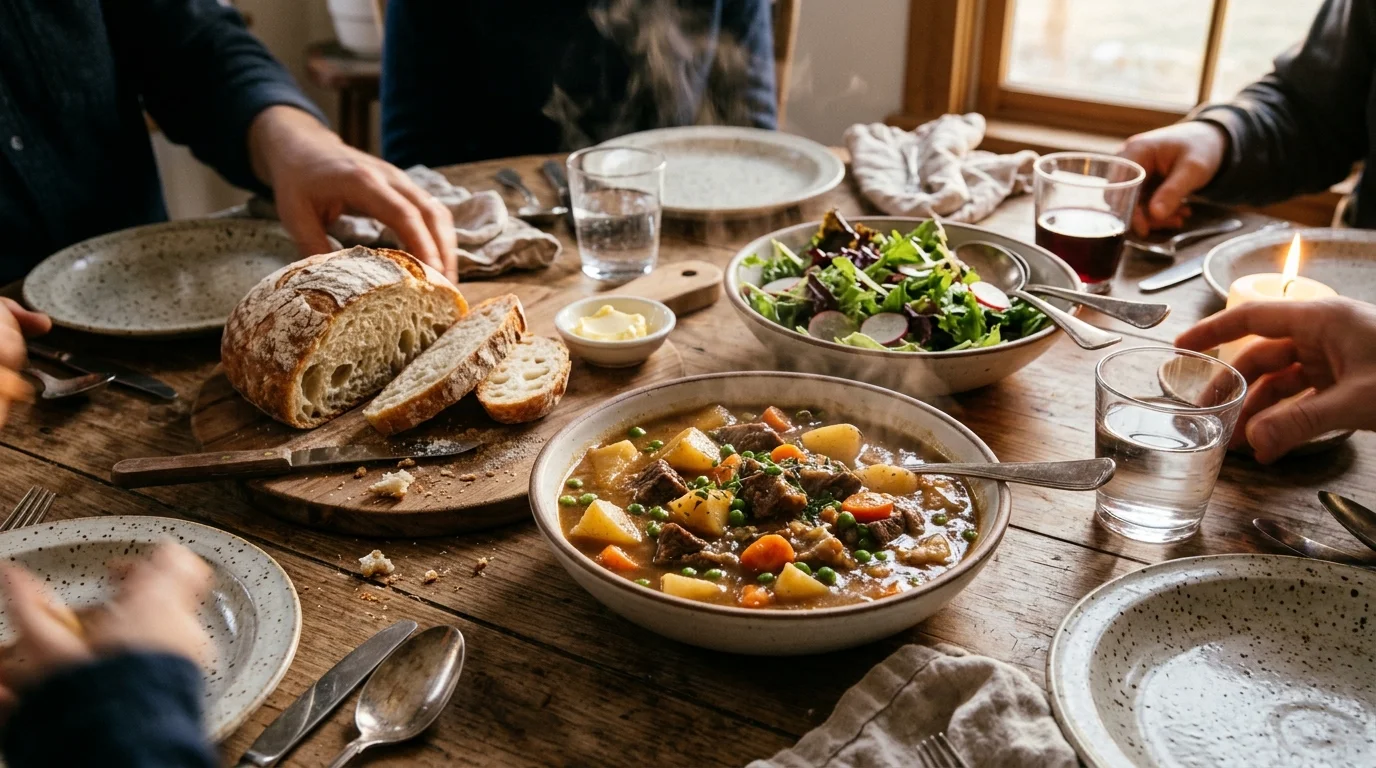
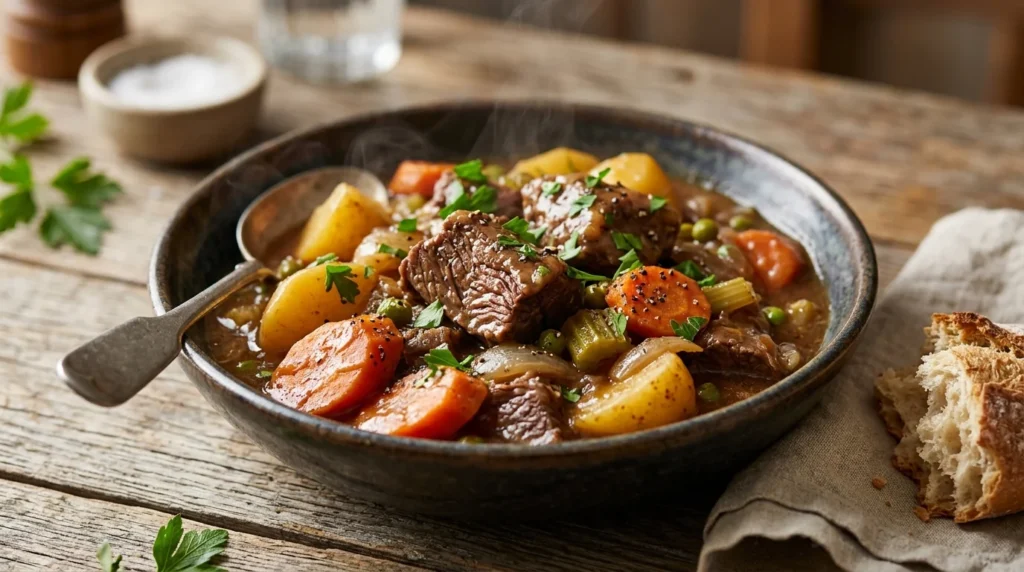
Few meals deliver the warmth and comfort of a homemade Old-Fashioned Beef Stew. Filled with tender pieces of beef, hearty potatoes, sweet carrots, onions, and a deeply savory gravy, this traditional dish is exactly the kind of satisfying dinner that belongs on the table during cool evenings, relaxed weekends, and family gatherings.
The appeal of stew comes from its simplicity. Instead of relying on complicated ingredients, the recipe builds flavor through classic cooking techniques. Browning the beef creates a rich foundation, onions and garlic add aroma, and slow simmering transforms the meat into tender, flavorful pieces. As the vegetables cook in the broth, they absorb the savory flavors of the stew.
This is also an excellent one-pot meal. Although it requires time to simmer, most of that time is hands-off. Once the ingredients are prepared and the pot is gently bubbling, the cooking process does much of the work
The result is a thick, comforting stew with a homemade character that is difficult to achieve with shortcuts. Serve it with crusty bread, biscuits, mashed potatoes, or simply enjoy a generous bowl on its own.
Whether you are making beef stew for the first time or searching for a dependable traditional recipe, this guide will help you create a hearty meal with tender beef and a beautifully developed gravy.
Why You’ll Love This beef Stew
A great beef stew combines several comforting textures and flavors in one bowl. The beef becomes tender during slow cooking, while potatoes and carrots make the dish filling enough to serve as a complete dinner.
Another reason to love this recipe is that it uses familiar ingredients. Beef, potatoes, carrots, onions, broth, tomato paste, herbs, and a few pantry seasonings are enough to create impressive depth of flavor.
The recipe is also flexible. You can add peas, celery, mushrooms, parsnips, or other vegetables depending on what you have available.
Beef stew is particularly useful when cooking for a family because one large pot can provide several servings. The flavor can become even more developed after the stew rests, making leftovers an appealing lunch or dinner option.
Best of all, the recipe creates the nostalgic flavor people expect from traditional homemade beef stew: rich gravy, tender vegetables, and slow-cooked beef in every spoonful.
Ingredients You’ll Need
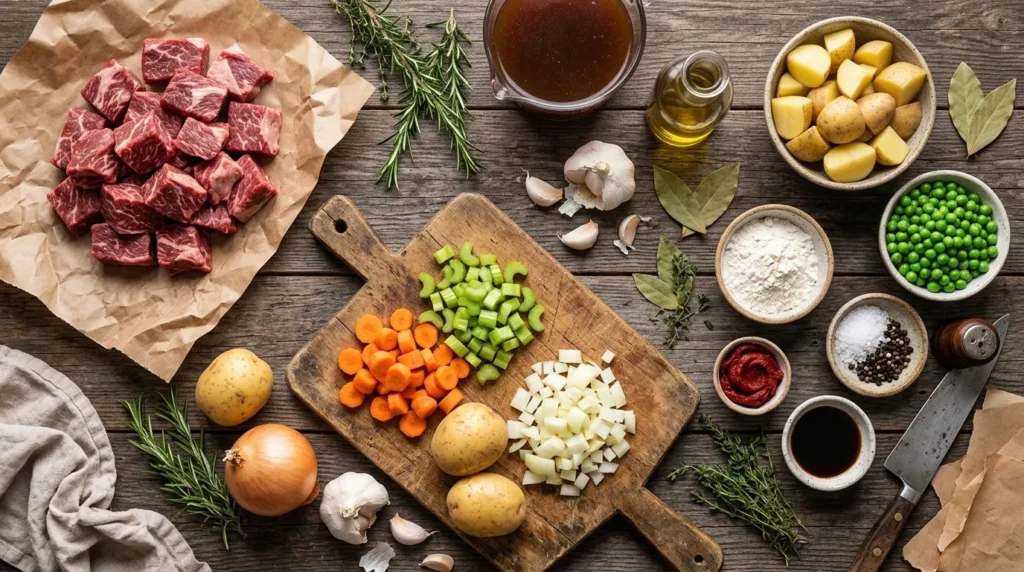
For approximately six servings, gather:
- 2 pounds beef chuck, cut into bite-sized cubes
- 2 tablespoons all-purpose flour
- 2 tablespoons olive oil
- 1 large yellow onion, chopped
- 3 garlic cloves, minced
- 2 tablespoons tomato paste
- 4 cups beef broth
- 1 tablespoon Worcestershire sauce
- 1 teaspoon dried thyme
- 1 teaspoon dried rosemary
- 2 bay leaves
- 4 medium carrots, cut into thick pieces
- 3 medium potatoes, cut into chunks
- 2 celery stalks, sliced
- 1 cup frozen peas
- Salt and freshly ground black pepper
- Fresh parsley for serving
Beef chuck is an excellent choice because its connective tissue softens during slow cooking, producing tender meat and adding richness to the broth.
Yukon Gold or red potatoes work particularly well because they hold their shape better than very starchy potatoes during prolonged simmering.
For additional depth, you can include a small amount of red wine. If you prefer not to use wine, simply add extra beef broth.
How to Make- Beef Stew
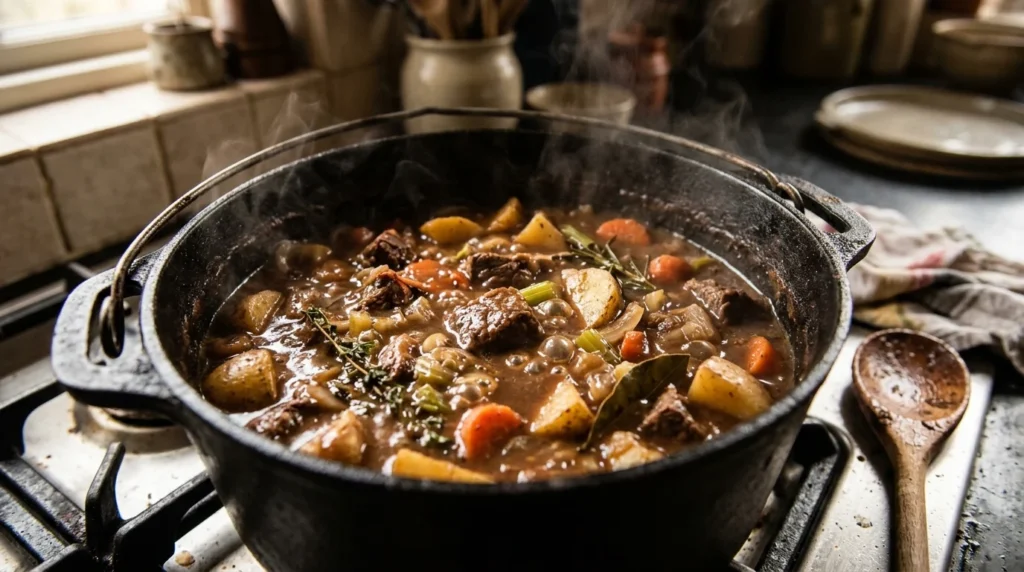
Pat the beef cubes dry with paper towels. Drying the surface helps the meat brown instead of steaming.
Season the beef generously with salt and black pepper, then toss it lightly with flour. The flour encourages browning and later helps thicken the stew.
Heat olive oil in a large Dutch oven or heavy-bottomed pot over medium-high heat.
Brown the beef in batches. Avoid overcrowding the pot because too many pieces at once can release moisture and prevent proper browning.
Once each batch develops a deep brown exterior, transfer it to a plate.
Reduce the heat slightly and add the chopped onion and celery. Cook until they begin to soften. Stir in the garlic and tomato paste and cook briefly until fragrant.
Pour in a small amount of beef broth and scrape the bottom of the pot with a wooden spoon. Those browned bits contain concentrated flavor.
Return the beef to the pot.
Add the remaining broth, Worcestershire sauce, thyme, rosemary, and bay leaves.
Bring the mixture to a gentle simmer, then reduce the heat. Cover partially and cook slowly until the beef begins becoming tender.
Add the carrots and potatoes later in the cooking process so they remain intact rather than turning mushy.
Continue simmering until the beef is fork-tender and the vegetables are cooked through.
During the final few minutes, stir in the frozen peas.
Remove the bay leaves, taste the gravy, and adjust the salt and pepper. Garnish with fresh parsley before serving.
Secrets to Tender Beef and Rich Gravy
The first secret to excellent beef stew is choosing the right cut of meat. Lean steak may sound appealing, but chuck is usually better suited to long, slow cooking.
Browning is equally important. The dark crust created on the outside of the beef develops flavors that eventually become part of the gravy. Take the time to brown the meat in small batches rather than rushing this stage.
Keep the stew at a gentle simmer. Aggressive boiling can make meat fibers tighten and may cause vegetables to break apart.
Another important detail is timing the vegetables. Potatoes and carrots generally need much less cooking time than the beef, so adding them after the meat has already simmered helps preserve their texture.
If the gravy seems too thin near the end, allow the stew to simmer uncovered for several minutes. Alternatively, mix a small amount of flour or cornstarch with cold water and gradually stir it into the simmering stew until the desired consistency is reached.
If the gravy becomes too thick, simply add a little more broth.
Delicious Beef Stew Variations
Traditional beef stew provides an excellent base for customization.
For mushroom beef stew, sauté sliced mushrooms with the onions before adding the liquid. Mushrooms contribute an earthy flavor that works especially well with beef.
For a vegetable-packed version, add parsnips, turnips, green beans, or additional celery.
If you enjoy tomato-rich stew, add canned diced tomatoes along with the broth. This creates a brighter, slightly tangier flavor.
You can also prepare a spicy variation by adding crushed red pepper flakes, smoked paprika, or a small amount of cayenne pepper.
For an herb-forward version, use fresh rosemary and thyme instead of dried herbs.
If you prefer a deeper, more complex gravy, a splash of red wine can be used to deglaze the pot after browning the meat. Allow it to reduce briefly before adding the broth.
What to Serve with Beef Stew
Because beef stew already contains meat, vegetables, and potatoes, it can easily stand alone as a complete meal.
However, crusty bread is one of the best accompaniments. A thick slice of sourdough, French bread, or homemade dinner rolls is perfect for soaking up the savory gravy.
Fluffy biscuits are another traditional option.
For an especially comforting meal, serve the stew over creamy mashed potatoes. If your stew already contains plenty of potatoes, buttered egg noodles or rice can provide an alternative base.
A fresh green salad with a light vinaigrette creates a refreshing contrast to the rich stew.
Roasted green vegetables such as broccoli, Brussels sprouts, or green beans also work well.
For serving, ladle the hot stew into deep bowls and finish with chopped parsley and freshly cracked black pepper.
Storage, Freezing, and Reheating Tips
Old-Fashioned Beef Stew is an excellent make-ahead meal because the flavors continue to blend as it rests.
Allow leftovers to cool, then transfer them to airtight containers and refrigerate promptly. Properly stored cooked beef stew can generally be kept in the refrigerator for about three to four days.
For longer storage, beef stew can be frozen. Keep in mind that potatoes may become slightly softer after freezing and thawing.
Freeze the cooled stew in freezer-safe containers with enough room for expansion. Individual portions are particularly convenient for future meals.
When reheating, warm the stew gently in a saucepan over medium-low heat, stirring occasionally. Add a splash of beef broth or water if the gravy has become too thick.
Make sure leftovers are reheated thoroughly before serving.
Frequently Asked Questions About Beef Stew
What is the best beef for stew?
Beef chuck is one of the best options because slow cooking transforms it into tender, flavorful meat.
Why is my beef stew meat tough?
It may simply need more cooking time. Tough cuts become tender gradually as connective tissue breaks down during gentle simmering.
Should I brown beef before making stew?
Yes. Browning creates deeper savory flavor and gives the finished gravy more complexity.
How can I thicken beef stew?
You can simmer it uncovered to reduce the liquid or add a small amount of flour or cornstarch slurry.
Can I make beef stew ahead of time?
Yes. Beef stew is particularly suitable for advance preparation and can taste even richer after resting in the refrigerator.
Can I add other vegetables?
Absolutely. Mushrooms, parsnips, turnips, green beans, and other hearty vegetables can be added according to preference.
A bowl of Old-Fashioned Beef Stew represents classic comfort food at its best. Tender beef, soft potatoes, sweet carrots, aromatic vegetables, and rich gravy combine to create a meal that feels hearty, familiar, and satisfying.