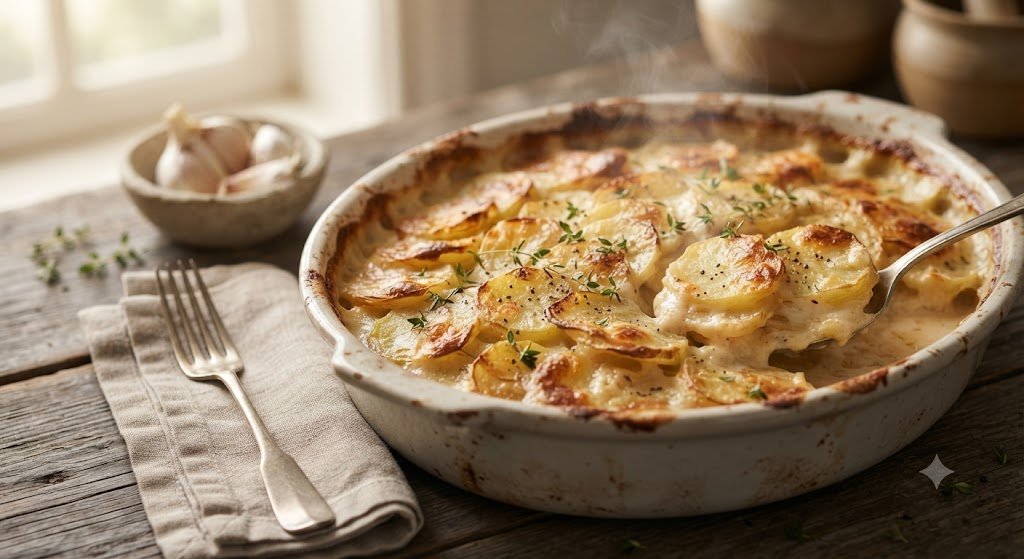
Few side dishes can match the comfort and elegance of Dauphinoise potatoes. With their delicate layers of thinly sliced potatoes baked in rich cream until perfectly tender, this traditional French recipe transforms simple ingredients into something truly unforgettable.
Whether you’re preparing a holiday feast, a Sunday roast, or a cozy family dinner, Dauphinoise potatoes deliver a luxurious texture and deep, creamy flavor that pairs beautifully with almost any main course.
In this complete guide, you’ll learn everything you need to know about Dauphinoise potatoes—from their history and ingredients to step-by-step preparation, expert tips, delicious variations, common mistakes, and serving ideas.
What Are Dauphinoise Potatoes?
Dauphinoise potatoes, known in France as Gratin Dauphinois, are a classic baked potato dish originating from the Dauphiné region in southeastern France.
Unlike many potato casseroles, authentic Dauphinoise potatoes are made by layering thin slices of potatoes with heavy cream, garlic, butter, salt, pepper, and sometimes a pinch of nutmeg. The potatoes slowly absorb the cream while baking, creating a silky texture and beautifully browned top.
The result is a dish that’s rich without being overwhelming and sophisticated without requiring complicated techniques.
The History of Dauphinoise Potatoes
The first documented version of Gratin Dauphinois dates back to the late 1700s in the Dauphiné province.
Originally, local families prepared the dish using fresh cream from nearby farms and starchy potatoes harvested from the surrounding countryside. Because these ingredients were readily available, the recipe became a regional favorite before eventually spreading throughout France and beyond.
Today, Dauphinoise potatoes are served in restaurants around the world and remain one of the country’s most celebrated comfort foods.
Why You’ll Love Dauphinoise Potatoes
There are many reasons this recipe has remained popular for generations.
Rich Yet Simple
Only a handful of ingredients are needed, yet the finished dish tastes luxurious.
Perfect for Entertaining
The recipe can be assembled ahead of time, making dinner parties far less stressful.
Versatile
Dauphinoise potatoes pair well with beef, chicken, pork, lamb, seafood, and vegetarian dishes.
Beautiful Presentation
The golden crust and creamy layers make it an impressive addition to any table.
Comfort Food at Its Best
Every bite combines buttery potatoes with velvety cream for the ultimate comforting side dish.
Ingredients You’ll Need
Traditional Dauphinoise potatoes rely on quality ingredients rather than quantity.
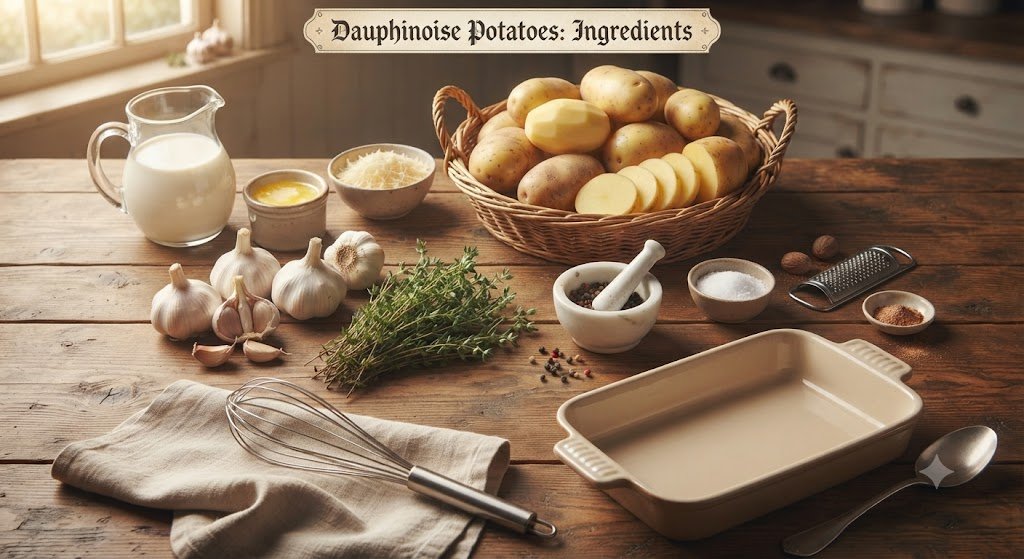
Potatoes
Choose starchy or all-purpose potatoes such as:
- Yukon Gold
- Russet potatoes
- Maris Piper (UK)
These varieties soften beautifully while maintaining their layered structure.
Heavy Cream
Heavy cream gives the dish its signature richness and creamy texture.
Garlic
Fresh garlic lightly perfumes the cream without overpowering the potatoes.
Butter
Butter is used to grease the baking dish and add flavor.
Salt and Black Pepper
Simple seasoning allows the potatoes and cream to shine.
Nutmeg (Optional)
A small pinch enhances the cream with subtle warmth.
Should You Add Cheese?
This is one of the biggest debates surrounding Dauphinoise potatoes.
Traditional French recipes generally do not include cheese. Instead, the starch from the potatoes thickens the cream naturally.
However, many modern recipes add:
- Gruyère
- Parmesan
- Cheddar
- Comté
Adding cheese creates a richer, slightly crispier topping while maintaining the dish’s creamy interior.
If authenticity is your goal, skip the cheese.
If you’re looking for extra indulgence, add a light sprinkle during the final 20 minutes of baking.
How to Make Dauphinoise Potatoes
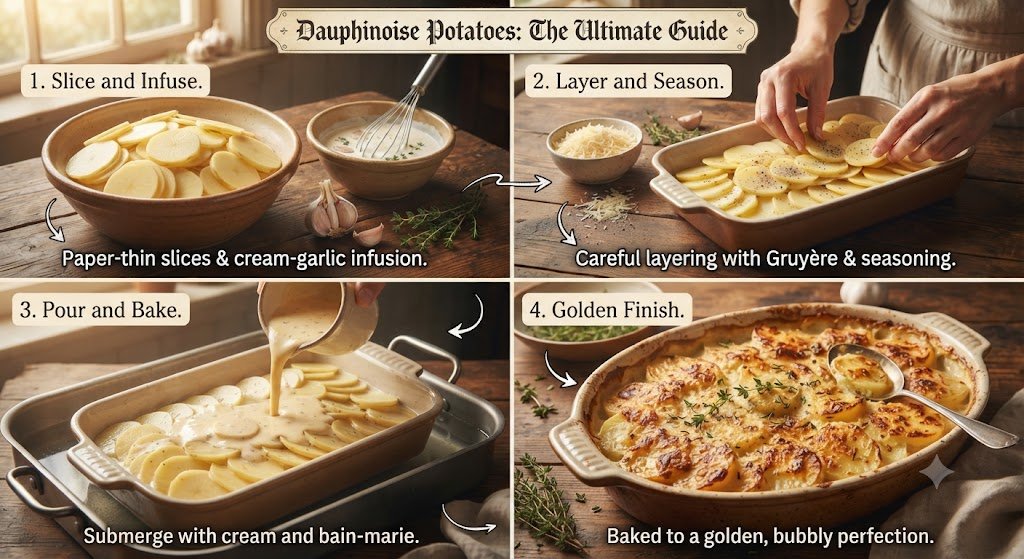
Step 1: Prepare the Potatoes
Peel the potatoes and slice them very thinly.
Aim for slices about 1/8 inch thick. A mandoline slicer makes this process much easier and ensures even cooking.
Avoid soaking the potatoes in water because their natural starch helps thicken the cream.
Step 2: Prepare the Baking Dish
Rub the inside of your baking dish with butter.
Then rub the dish with a cut garlic clove for extra flavor.
Step 3: Layer the Potatoes
Arrange one layer of potatoes in the dish.
Season lightly with:
- Salt
- Pepper
- Nutmeg (optional)
Repeat until all potatoes have been layered.
Step 4: Pour Over the Cream
Warm the heavy cream slightly before pouring it evenly over the potatoes.
The cream should almost cover the top layer.
Step 5: Bake Slowly
Bake at 325°F (160°C) for approximately 75–90 minutes.
The potatoes should become fork-tender while the surface develops a beautiful golden color.
Step 6: Rest Before Serving
Allow the dish to rest for 10–15 minutes.
This helps the cream thicken, making it easier to serve neat portions.
Tips for Perfect Dauphinoise Potatoes
Small details make a big difference.
Slice Evenly
Uniform slices cook at the same rate.
Use Heavy Cream
Lower-fat milk may separate during baking and produce a thinner sauce.
Don’t Rush
Slow baking allows the potatoes to absorb the cream gradually.
Season Every Layer
Even seasoning ensures balanced flavor throughout the dish.
Let It Rest
Resting improves texture and prevents the cream from running when served.
Common Mistakes to Avoid
Even experienced cooks occasionally make these mistakes.
Slicing Potatoes Too Thick
Thick slices remain firm while thinner slices become perfectly tender.
Washing Away the Starch
Rinsing sliced potatoes removes the starch that naturally thickens the cream.
Using Low-Fat Dairy
Reduced-fat dairy often creates a watery sauce.
Overcrowding the Dish
Too many potato layers increase cooking time and may leave the center undercooked.
Baking at High Heat
High temperatures can cause the cream to curdle before the potatoes soften.
Delicious Variations
While traditional Dauphinoise potatoes are wonderfully simple, there are several tasty variations.
Cheese Dauphinoise
Top with Gruyère or Parmesan during the last part of baking.
Herb Version
Add fresh thyme, rosemary, or chives between the layers.
Garlic Lover’s Version
Mix roasted garlic into the cream for a sweeter garlic flavor.
Mushroom Dauphinoise
Layer sautéed mushrooms between the potatoes.
Truffle Version
Finish with a drizzle of truffle oil before serving.
What to Serve with Dauphinoise Potatoes
This creamy side dish complements many meals.
Beef
- Prime rib
- Roast beef
- Steak
- Beef tenderloin
Chicken
- Roast chicken
- Herb-roasted chicken
- Garlic chicken
Pork
- Pork chops
- Roast pork loin
- Pork tenderloin
Lamb
- Roast leg of lamb
- Lamb chops
Seafood
- Baked salmon
- Grilled cod
- Garlic shrimp
Vegetarian Meals
Serve alongside:
- Roasted asparagus
- Green beans
- Brussels sprouts
- Mixed roasted vegetables
- Fresh salad
Can You Make Dauphinoise Potatoes Ahead?
Yes.
This recipe is excellent for meal planning.
Prepare everything one day before baking.
Cover tightly and refrigerate.
When ready to cook, allow the dish to sit at room temperature for about 30 minutes before placing it in the oven.
You can also bake it completely, refrigerate, and gently reheat before serving.
Storage Tips
Leftovers store surprisingly well.
- Refrigerate for up to 4 days.
- Keep in an airtight container.
- Reheat in the oven for the best texture.
- Microwave reheating works but may soften the crispy top.
Can You Freeze Dauphinoise Potatoes?
Yes, although the cream may change texture slightly after thawing.
For best results:
- Cool completely.
- Wrap tightly.
- Freeze for up to 2 months.
- Thaw overnight in the refrigerator.
- Reheat covered before uncovering to crisp the top.
Nutritional Overview
Dauphinoise potatoes are an indulgent side dish, making them ideal for special occasions.
A typical serving provides:
- Carbohydrates from potatoes for energy.
- Calcium from dairy.
- Potassium from potatoes.
- Healthy fats from cream and butter.
Because the dish is rich, smaller portions are usually satisfying.
How to Make It Slightly Lighter
If you’d like a lighter version, try these ideas:
- Replace part of the cream with whole milk.
- Use less butter.
- Add herbs for extra flavor without additional calories.
- Serve with plenty of fresh vegetables.
These changes maintain much of the dish’s creamy appeal while reducing richness.
Why Thin Slices Matter
One secret behind exceptional Dauphinoise potatoes is thin, consistent slicing.
Thin slices:
- Cook evenly.
- Absorb cream better.
- Form beautiful layers.
- Create a silky texture.
- Reduce overall cooking time.
A mandoline slicer is one of the best kitchen tools for achieving professional-looking results.
Perfect Occasions for Dauphinoise Potatoes
This dish fits almost every celebration.
It’s ideal for:
- Christmas dinner
- Thanksgiving
- Easter
- Sunday family meals
- Romantic dinners
- Dinner parties
- Birthday celebrations
- Holiday buffets
Its elegant appearance makes even a simple meal feel special.
Expert Tips for Restaurant-Quality Results
Professional chefs often follow a few simple techniques.
Warm the cream before pouring it over the potatoes to encourage even cooking.
Use freshly grated nutmeg instead of pre-ground for a more delicate aroma.
Choose a shallow baking dish rather than a deep one to promote even browning.
Cover the dish with foil during the first half of baking if the top begins to brown too quickly, then remove the foil to finish with a crisp, golden crust.
Finally, allow the gratin to rest before serving. This brief pause helps the creamy layers set beautifully.
Conclusion
Dauphinoise potatoes prove that extraordinary dishes don’t require complicated ingredients. With just potatoes, cream, garlic, butter, and careful preparation, you can create a side dish that’s elegant enough for holidays yet comforting enough for everyday dinners.
Whether you choose the traditional French version or add your own twist with cheese, herbs, or mushrooms, this creamy potato bake is sure to become a favorite at your table. Take your time, use quality ingredients, and let the oven work its magic. The reward is a golden, velvety dish that’s guaranteed to impress family and guests alike.
Frequently Asked Questions
1. What is the difference between Dauphinoise potatoes and scalloped potatoes?
Dauphinoise potatoes traditionally use heavy cream and no cheese, while scalloped potatoes often include milk, flour, and sometimes cheese. The French version has a richer, creamier texture.
2. What potatoes work best for Dauphinoise?
Starchy or all-purpose potatoes like Yukon Gold and Russet are excellent choices because they become tender while releasing enough starch to naturally thicken the cream.
3. Can I prepare Dauphinoise potatoes the day before?
Yes. You can assemble the dish ahead of time, refrigerate it, and bake it the next day, or bake it fully and reheat before serving.
4. Why did my Dauphinoise potatoes turn watery?
Watery potatoes are often caused by using low-fat dairy, rinsing the sliced potatoes, or not baking the dish long enough for the cream to reduce and thicken.
5. Can I add cheese to Dauphinoise potatoes?
Yes. While classic French recipes usually omit cheese, adding Gruyère, Parmesan, or Comté creates a richer flavor and a beautifully browned crust.