Introduction
When you’re looking for a meal that’s hearty, flavorful, and easy to prepare, few recipes can compete with a Paprika Chicken Thighs and Rice Skillet. This classic one-pan dinner combines juicy, well-seasoned chicken thighs with tender, perfectly cooked rice, all infused with the warm, smoky flavor of paprika. The result is a comforting dish that’s ideal for busy weeknights, family dinners, or meal prep.
One-pan meals have become increasingly popular because they simplify cooking while reducing cleanup. Instead of juggling multiple pots and pans, everything cooks together in a single skillet, allowing the ingredients to share flavors and create a rich, satisfying meal.
In this guide, you’ll learn everything you need to know about making the perfect paprika chicken thighs and rice skillet, including ingredient selection, cooking techniques, helpful tips, recipe variations, storage advice, and common mistakes to avoid.
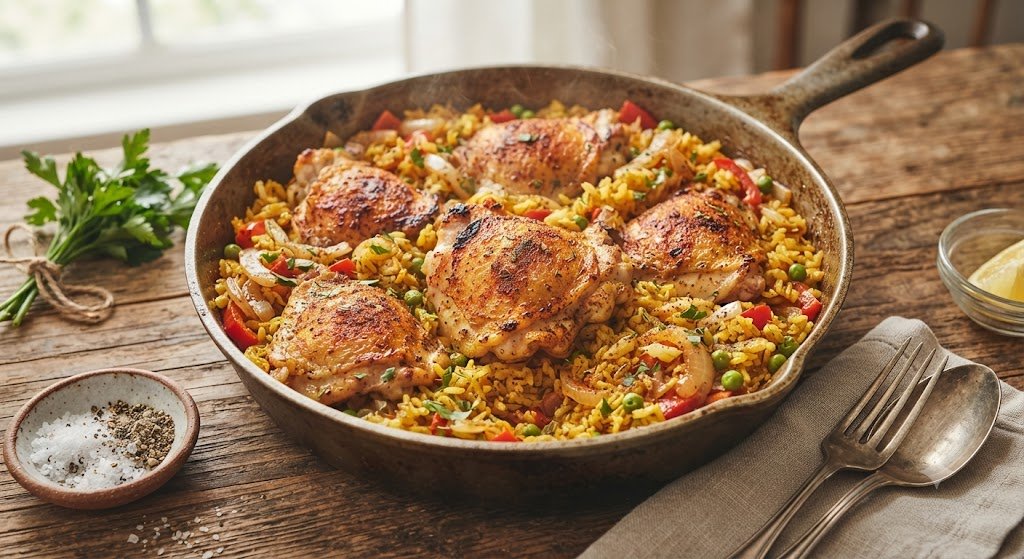
Why You’ll Love This Recipe
There are plenty of reasons this dish deserves a place in your weekly meal rotation.
Easy One-Pan Cooking
Everything cooks in a single skillet, making preparation simple and cleanup quick.
Rich, Smoky Flavor
Paprika gives the chicken and rice a warm, earthy flavor that pairs beautifully with garlic, onions, and herbs.
Budget-Friendly
Chicken thighs and rice are affordable ingredients that create a filling meal without stretching your grocery budget.
Perfect for Families
The recipe can easily be doubled to feed a larger group, making it an excellent choice for family dinners or gatherings.
Great for Meal Prep
The leftovers reheat well, making this recipe perfect for lunches throughout the week.
What Makes Paprika So Special?
Paprika is made from dried, ground peppers and comes in several varieties.
Sweet Paprika
This is the most common type and adds mild sweetness with vibrant color.
Smoked Paprika
Smoked paprika delivers a deeper, wood-fired flavor that enhances grilled and roasted dishes.
Hot Paprika
For those who enjoy spicy food, hot paprika adds noticeable heat while maintaining its rich pepper flavor.
Many cooks combine sweet and smoked paprika for a balanced taste.
Ingredients You’ll Need
This recipe relies on simple pantry staples that work together beautifully.
Chicken Thighs
Bone-in, skin-on chicken thighs produce the juiciest results because the bones help retain moisture during cooking.
Boneless chicken thighs are also an excellent option if you prefer quicker cooking.
Rice
Long-grain white rice works best because it cooks evenly and absorbs the flavorful broth without becoming sticky.
Basmati and jasmine rice are excellent alternatives.
Onion
A diced onion creates a savory base that adds sweetness as it cooks.
Garlic
Fresh garlic brings depth and complements the paprika chicken thighs perfectly.
Chicken Broth
Cooking the rice in broth instead of water dramatically improves flavor.
Choose low-sodium broth if you prefer more control over seasoning.
Olive Oil
A small amount helps brown the chicken and sauté the vegetables.
Paprika
Use high-quality paprika for the richest color and flavor.
Additional Seasonings
Common seasonings include:
- Salt
- Black pepper
- Garlic powder
- Onion powder
- Dried thyme
- Oregano
- Parsley
Optional Vegetables
To make the meal even more nutritious, consider adding:
- Bell peppers
- Mushrooms
- Spinach
- Peas
- Carrots
- Zucchini
- Corn
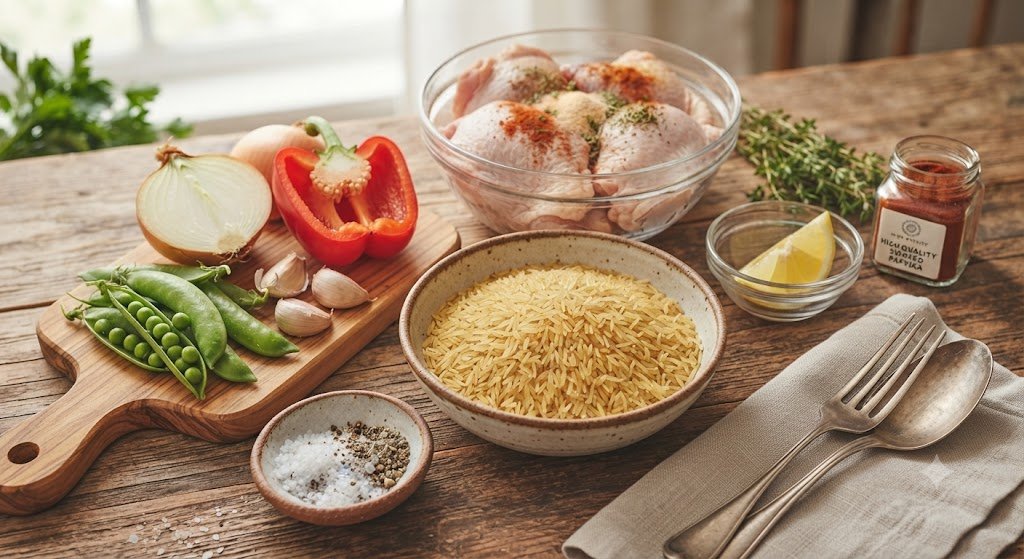
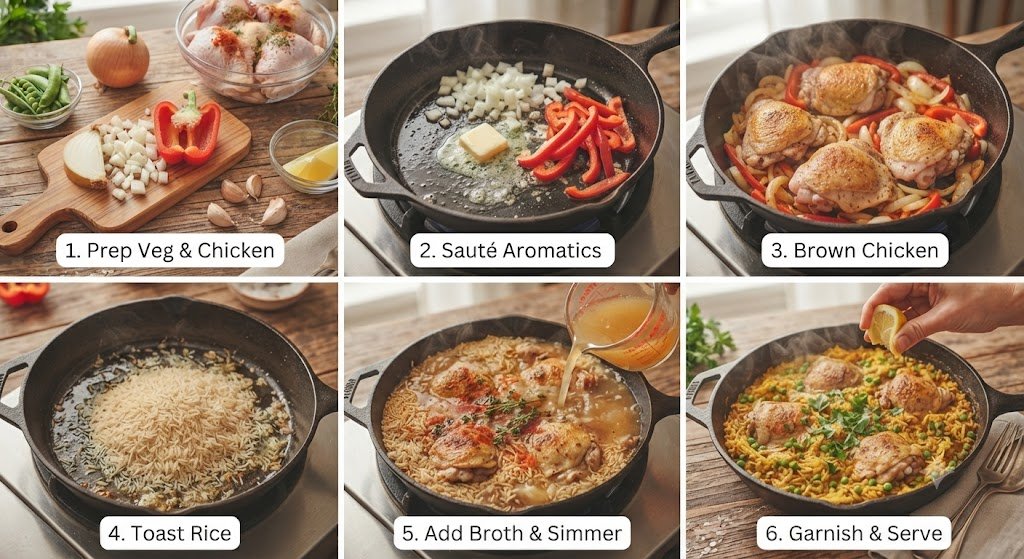
How to Make Paprika Chicken Thighs and Rice Skillet
Step 1: Season the Chicken
Pat the chicken dry with paper towels.
Season generously with paprika, salt, pepper, garlic powder, and onion powder.
Allow the seasoning to sit for about 10 minutes before cooking.
Step 2: Brown the Chicken
Heat olive oil in a large skillet over medium-high heat.
Place the chicken skin-side down.
Cook until the skin becomes golden brown.
Flip and cook the other side briefly.
Remove the chicken and set it aside.
Step 3: Sauté the Aromatics
In the same skillet, cook the diced onion until soft.
Add minced garlic and stir for about one minute.
The browned bits left behind by the chicken add incredible flavor.
Step 4: Toast the Rice
Add uncooked rice to the skillet.
Cook for two to three minutes while stirring frequently.
Lightly toasted rice develops a richer flavor.
Step 5: Add the Broth
Pour in the chicken broth.
Stir gently to combine the rice with the onions and seasonings.
Step 6: Return the Chicken
Place the browned chicken thighs on top of the rice.
Cover the skillet with a tight-fitting lid.
Reduce the heat to low.
Allow everything to simmer until the rice becomes tender and the chicken reaches an internal temperature of 165°F (74°C).
Step 7: Rest Before Serving
Remove the skillet from the heat.
Let it rest for five minutes before serving.
This allows the rice to finish absorbing the remaining liquid.
Tips for Perfect Results
Dry the Chicken First
Removing excess moisture helps create beautifully browned skin.
Don’t Skip Browning
Browning develops flavor that carries throughout the entire dish.
Use Fresh Garlic
Fresh garlic creates a richer taste than garlic powder alone.
Keep the Lid Closed
Opening the lid too often releases steam, which is essential for properly cooking the rice.
Let It Rest
A short resting period improves both texture and flavor.
Delicious Recipe Variations
One of the best things about this recipe is its flexibility.
Creamy Paprika Chicken Skillet
Stir in a splash of heavy cream during the last few minutes of cooking.
Spicy Version
Add cayenne pepper or crushed red pepper flakes.
Mediterranean Style
Mix in olives, cherry tomatoes, spinach, and crumbled feta cheese before serving.
Mushroom Paprika Chicken
Add sliced mushrooms while sautéing the onions.
Vegetable-Packed Skillet
Include peas, carrots, corn, and bell peppers for extra nutrition and color.
Best Side Dishes
Although this meal is complete on its own, several side dishes pair beautifully with it.
Popular choices include:
- Garden salad
- Roasted broccoli
- Green beans
- Garlic bread
- Steamed asparagus
- Cucumber salad
- Roasted Brussels sprouts
- Dinner rolls
A fresh salad provides a refreshing contrast to the warm, savory skillet.
Common Mistakes to Avoid
Using Too Much Liquid
Excess broth can leave the rice soft and mushy.
Measure carefully.
Stirring Too Often
Once the broth has been added, avoid stirring repeatedly.
This helps the rice cook evenly.
Overcooking the Chicken
Chicken thighs are forgiving, but excessive cooking can still dry them out.
Use a meat thermometer whenever possible.
Using Low Heat for Browning
High enough heat is necessary to achieve a flavorful golden crust.
Skipping the Resting Time
Allowing the skillet to rest improves the texture of the rice.
Storage Tips
Store leftovers in an airtight container.
Refrigerate for up to four days.
For longer storage, freeze individual portions for up to three months.
Reheating Instructions
Microwave
Heat individual servings with a splash of broth or water to prevent the rice from drying out.
Stovetop
Warm gently over medium-low heat with a little broth.
Oven
Cover with foil and bake at 325°F (163°C) until heated through.
Nutritional Benefits
Paprika chicken thighs and rice provide a balanced combination of protein and carbohydrates.
Chicken thighs are rich in protein, iron, zinc, and several B vitamins that support energy production.
Rice supplies carbohydrates that provide long-lasting energy.
Paprika contains antioxidants, including carotenoids, which contribute to its vibrant red color. While used in relatively small amounts, paprika also adds vitamins A and E along with a flavorful boost.
Adding vegetables increases fiber, vitamins, and minerals while making the meal even more satisfying.
Why Homemade Is Better Than Takeout
Preparing this skillet meal at home allows you to choose fresh ingredients and adjust the seasoning to your preferences.
Homemade meals typically contain less sodium and fewer preservatives than many restaurant or packaged options.
You also have complete control over the quality of the chicken, broth, and vegetables, making it easier to create a healthier meal.
Another advantage is cost. A single skillet can feed an entire family for a fraction of the price of ordering takeout.
Expert Tips for Restaurant-Quality Flavor
Professional cooks rely on a few simple techniques to elevate this dish.
- Use smoked paprika along with sweet paprika for more depth.
- Brown the chicken thoroughly before adding the rice.
- Toast the rice before pouring in the broth.
- Simmer gently rather than boiling rapidly.
- Finish with freshly chopped parsley and a squeeze of lemon juice for brightness.
These small details create layers of flavor that make the finished meal taste like it came from a restaurant kitchen.
Paprika Chicken Thighs and Rice Skillet is the perfect example of how simple ingredients can come together to create a comforting, flavorful meal. Tender chicken thighs, aromatic rice, garlic, onions, and the warm richness of paprika combine in one pan to produce a satisfying dinner that’s both practical and delicious.
Whether you’re cooking for your family, preparing meals ahead of a busy week, or simply looking for a dependable one-pan recipe, this dish delivers every time. With the helpful tips, variations, and techniques in this guide, you’ll be able to create a perfectly cooked skillet meal that’s full of flavor and easy enough to make again and again.
Frequently Asked Questions
1. Can I use boneless chicken thighs instead of bone-in?
Yes. Boneless chicken thighs cook a little faster and still remain juicy. Just reduce the cooking time slightly to prevent overcooking.
2. What type of rice works best for this recipe?
Long-grain white rice is the most reliable choice because it cooks evenly and absorbs the flavorful broth without becoming sticky. Basmati and jasmine rice are also excellent options.
3. Can I make this recipe ahead of time?
Absolutely. This skillet meal stores well in the refrigerator for up to four days and reheats beautifully, making it ideal for meal prep.
4. Can I add vegetables to the skillet?
Yes. Bell peppers, peas, carrots, mushrooms, spinach, zucchini, and corn all pair well with the chicken and rice while adding color and nutrition.
5. How do I keep the chicken juicy?
Brown the chicken first, avoid overcooking, maintain a gentle simmer, and allow the skillet to rest for a few minutes before serving. These steps help the chicken stay tender and flavorful.